
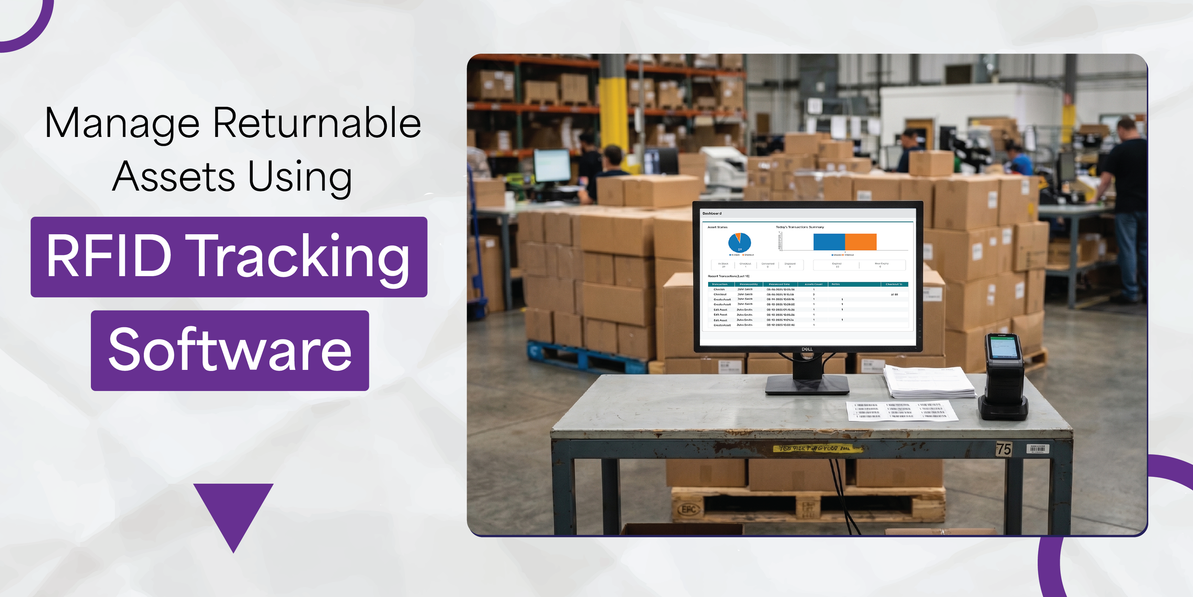
Manage Returnable Assets Using RFID Tracking Software
Introduction
Returnable assets are items such as containers, pallets, tools, and equipment that circulate within supply chains and are reused multiple times. Managing these assets manually often leads to challenges like loss, misplacement, and inefficiency, which increase operational costs and disrupt workflows.
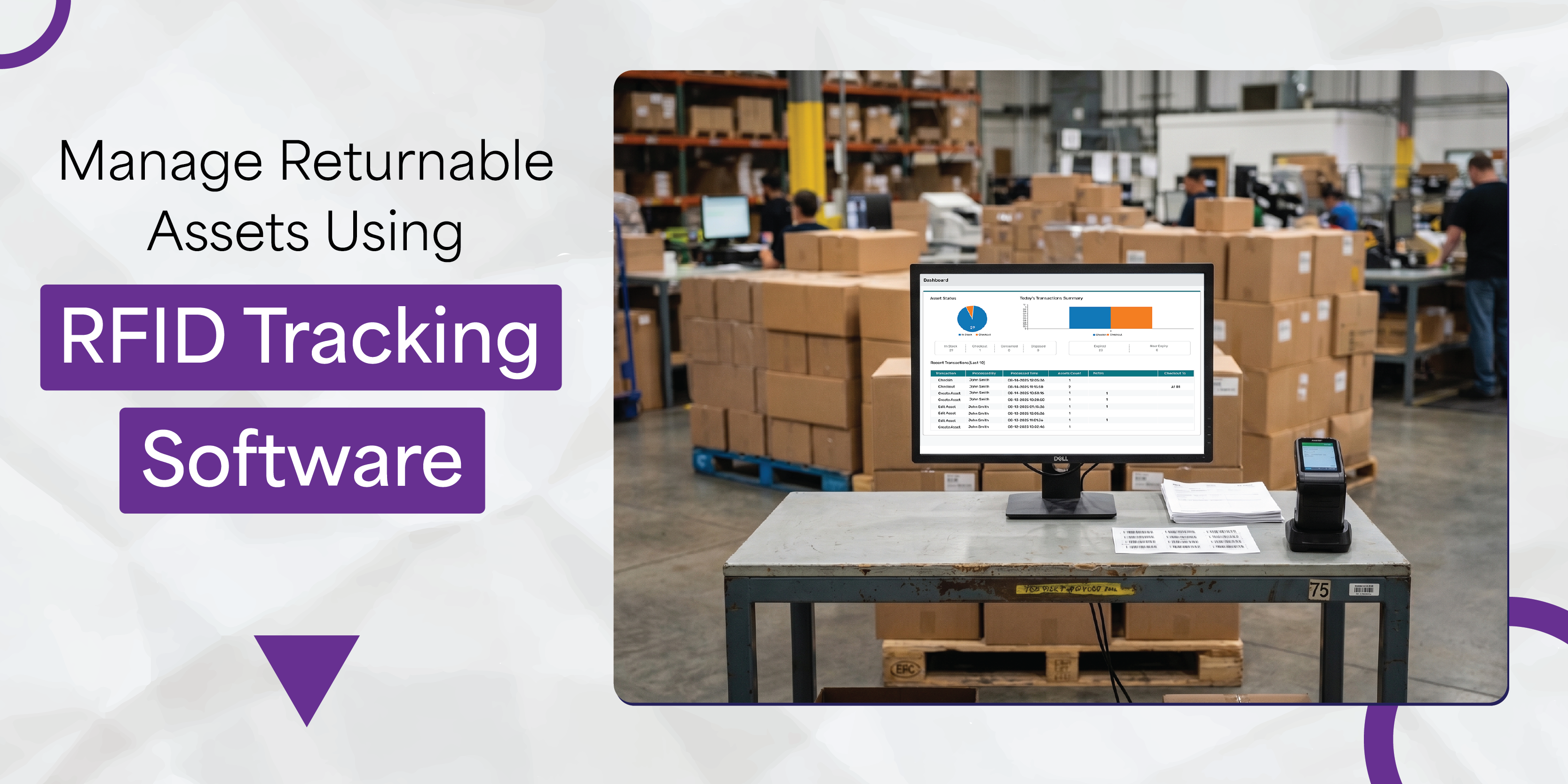
Why RFID for Returnable Assets
Unlike barcodes or manual logs, RFID provides automated, real-time visibility. Assets can be tracked without line-of-sight scanning, reducing human error and saving time. This ensures businesses know exactly where their assets are at any given moment.
Core Components of RFID Tracking
- RFID Tags: Small identifiers attached to assets, enabling quick recognition and tracking throughout their lifecycle.
- RFID Readers: Devices, fixed or handheld, that capture tag data instantly, ensuring seamless monitoring.
- Tracking Software: Centralized platform that organizes collected data, giving managers clear visibility into asset movement and usage.
How RFID Tracking Software Works
RFID tracking software works by tagging assets with RFID labels that store unique identification data. As assets move through facilities or supply chains, fixed and mobile readers capture their location and status automatically. This information is then integrated into ERP or warehouse management systems, creating a unified, real-time view of asset activity. The process eliminates manual errors, improves visibility, and ensures businesses can monitor and manage returnable assets efficiently across their lifecycle.
Key Benefits of RFID in Returnable Asset Management
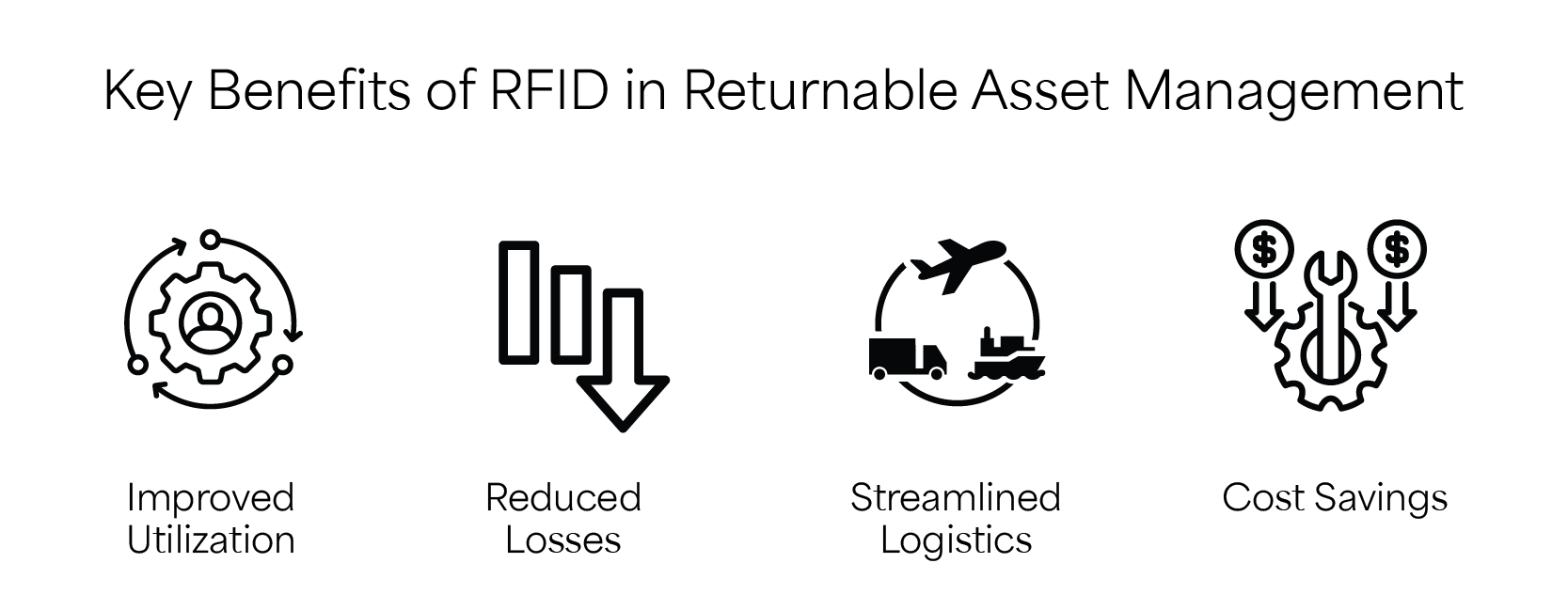
Improved Utilization
RFID ensures assets are used efficiently by providing accurate visibility into their availability and movement, reducing idle time and maximizing productivity.
Reduced Losses
Real-time monitoring minimizes theft and misplacement, helping businesses protect valuable resources and avoid costly replacements.
Streamlined Logistics
Automated tracking speeds up turnaround, simplifies supply chain operations, and ensures smoother asset circulation across facilities.
Cost Savings
By reducing manual labor and errors, RFID lowers operational costs while improving overall efficiency.
Enhanced Accountability
RFID creates tamper-proof records of asset movement, supporting audits, compliance, and better decision-making with reliable data.
TagMatiks Asset Tracking (AT)
TagMatiks AT is a cloud-based RFID platform built for asset lifecycle management.
Cloud-Based Platform: TagMatiks AT is a scalable RFID solution designed for complete asset lifecycle management, offering flexibility and accessibility across industries.
Real-Time Visibility: Provides instant tracking of assets, ensuring businesses always know their location, status, and usage.
Automated Audits: Simplifies compliance and reporting by reducing manual checks, saving time, and improving accuracy.
ERP/POS Integration: Seamlessly connects with enterprise systems, enabling unified data management and streamlined workflows.
Industry Use Cases: Widely adopted in manufacturing, retail, healthcare, and logistics to manage returnable assets effectively.
Operational Impact: Enhances efficiency, reduces asset loss, and supports compliance with reliable, centralized data.
Scalability & Flexibility: Designed to grow with business needs, TagMatiks AT adapts to different environments, asset types, and operational scales.
By leveraging TagMatiks AT, businesses gain a scalable solution that ensures assets are tracked, managed, and optimized across their lifecycle.
Industries Using RFID for Returnable Assets
Manufacturing
RFID helps track pallets, tools, and raw materials, ensuring assets are available when needed and reducing production delays.
Retail
Stores use RFID to manage reusable containers and racks, improving inventory accuracy and preventing loss throughout the supply chain.
Healthcare
Hospitals monitor medical equipment and assets in real time, reducing misplacement and ensuring critical tools are always accessible.
Logistics
RFID controls returnable transport packaging, streamlining shipments and reducing costs by minimizing lost or misplaced containers.
Construction
RFID tracks tools and heavy equipment across sites, improving accountability, reducing theft, and ensuring projects run smoothly.
Best Practices for Implementing RFID Tracking
- Select the Right Hardware: Choose RFID tags and readers suited to your environment, ensuring durability, accuracy, and compatibility with asset types.
- Integrate with Existing Systems: Connect RFID software to ERP or WMS platforms for seamless data flow and centralized asset visibility.
- Train Staff Thoroughly: Educate employees on RFID processes to encourage adoption, reduce errors, and maximize efficiency.
- Monitor ROI and Scalability: Regularly evaluate performance, track savings, and plan for expansion to ensure long-term success.
- Ensure Data Security (Added Point): Protect collected RFID data using secure protocols to safeguard sensitive information and maintain compliance across industries.
Conclusion
Managing returnable assets is critical for efficiency, cost savings, and sustainability. RFID tracking software transforms this process by offering real-time visibility, automation, and accountability. With solutions like TagMatiks Asset Tracking (AT), businesses can reduce losses, streamline operations, and scale confidently. Investing in RFID ensures smarter asset management and long-term success.
Recent Posts
-
5 Tag Placement Errors Ruining RFID Accuracy
Introduction Radio Frequency Identification has become a backbone of modern inventory management, re …Sep 8th 2026 -

RFID Asset Tracking for HVAC Companies
HVAC companies rely on a wide range of tools, vehicles, and spare parts to deliver timely service. M …Aug 25th 2026 -
Fix Inventory Inaccuracy with RFID Inventory Tracking Software
Introduction Inventory inaccuracy is one of the biggest challenges businesses face today. Manual err …Aug 12th 2026