
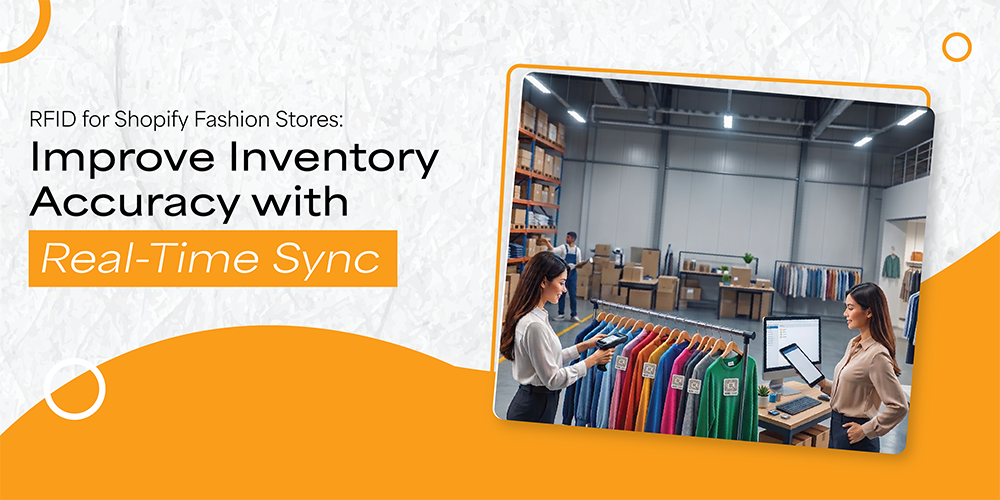
RFID for Shopify Fashion Stores: Improve Inventory Accuracy with Real-Time Sync
Introduction
Fashion retail moves at lightning speed. New collections drop every season, trends shift overnight, and customers expect instant availability. Yet, behind the scenes, many fashion stores struggle with one persistent challenge: inventory accuracy. Manual updates, mismatched stock counts, and overselling can frustrate customers and hurt brand reputation.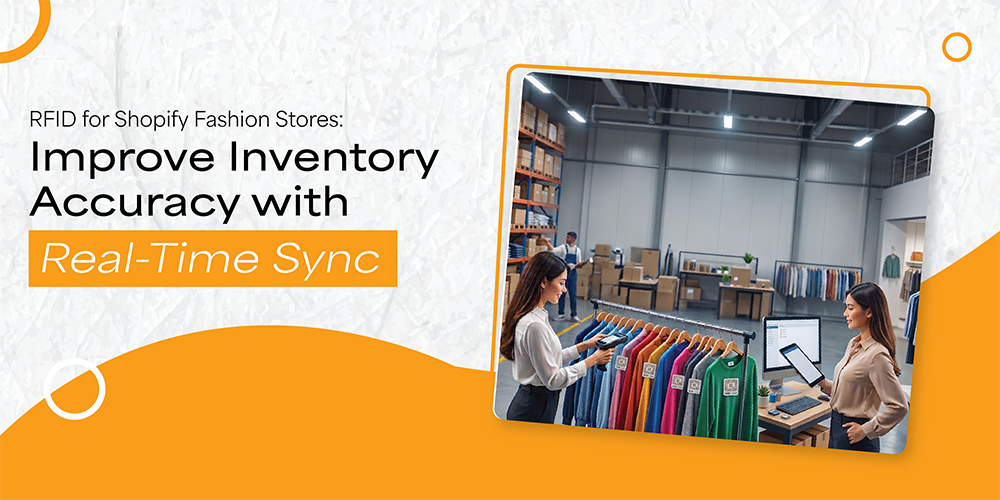
This is where RFID technology integrated with Shopify comes in — offering a smarter, faster, and more reliable way to manage inventory.
Understanding RFID Technology
Radio Frequency Identification uses radio waves to identify and track items.
- Components:
Unlike barcodes, RFID doesn’t require line-of-sight scanning. Multiple items can be read simultaneously, making it faster and more efficient.
Beyond fashion, RFID is used in logistics, healthcare (tracking equipment), and libraries (managing books).
Challenges in Fashion Store Inventory Management
Fashion retailers face unique hurdles: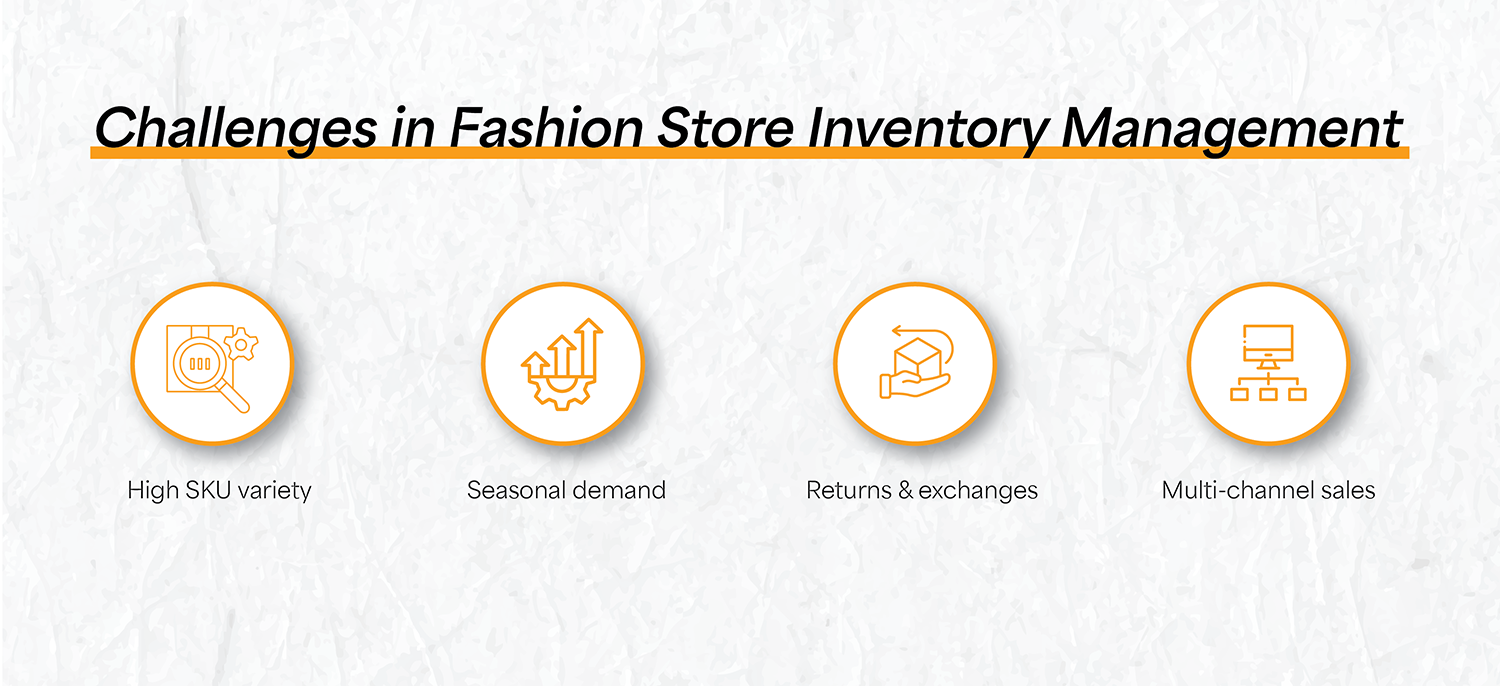
High SKU variety: Fashion items come in many sizes, colors, and styles. This creates thousands of unique product variations, making inventory tracking complex and prone to errors.
Seasonal demand: Fashion sales spike during festive seasons, holidays, or sudden trend shifts. Stores often struggle to predict demand accurately, leading to stockouts or excess inventory.
Returns & exchanges: Frequent returns and exchanges constantly change stock levels. Without real-time updates, inventory records quickly become inaccurate, frustrating both staff and customers.
Multi-channel sales: Selling online and offline simultaneously requires perfect synchronization. Without automated systems, mismatched stock counts can cause overselling or missed opportunities.
How RFID Syncs with Shopify
Seamless Shopify–TagMatiks Retail Integration
TagMatiks RFID Connect is designed to bridge Shopify with TagMatiks Retail, creating a powerful solution for inventory automation. This integration ensures that every product tagged with RFID is tracked in real time, and updates flow directly into Shopify’s system.
- Shopify acts as the storefront, while TagMatiks Retail manages the backend inventory.
- The middleware ensures both platforms stay perfectly aligned, reducing mismatches and manual updates.
- Retailers can choose whether they want Shopify or TagMatiks Retail as the source of truth, depending on their workflow.
Example Workflow
- Print RFID labels – Each fashion item gets a unique RFID tag.
- Tag products – RFID labels are attached to clothing items.
- Scan items – RFID readers capture hundreds of products instantly.
- Sync inventory – Data flows into TagMatiks Retail and Shopify simultaneously with the help of TagMatiks RFID Connect.
- Unified dashboard – Retailers see accurate stock levels across online and offline channels.
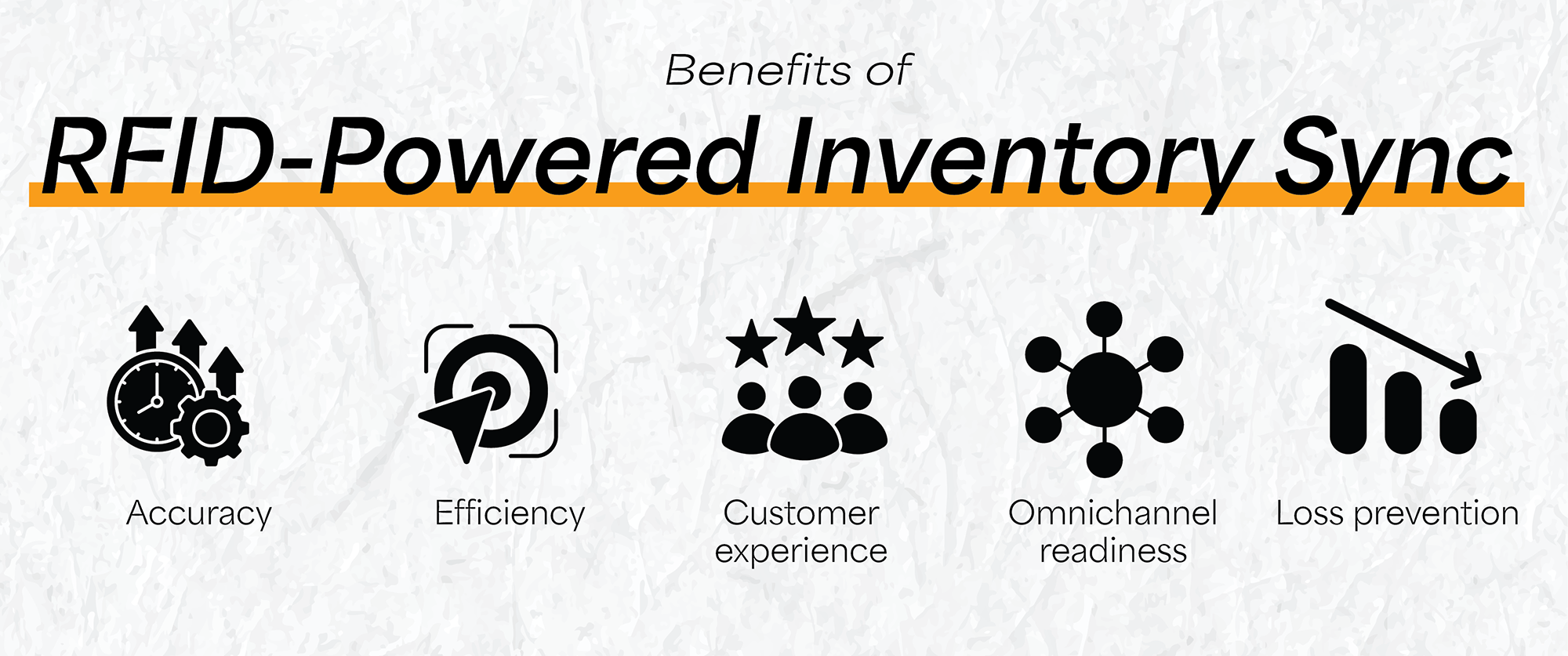
Accuracy
RFID provides near-perfect visibility of stock, ensuring every item is tracked correctly. This reduces errors and keeps Shopify inventory records reliable, even with thousands of fashion SKUs.
Efficiency
Inventory audits that once took hours can be completed in minutes. RFID reduces manual work, freeing staff to focus on customer service and sales.
Customer experience
Real-time updates prevent overselling and guarantee product availability. Customers enjoy smoother shopping experiences, both online and in-store.
Omnichannel readiness
RFID ensures Shopify inventory stays aligned across online and offline channels. This makes order fulfillment faster and more reliable, supporting true omnichannel retail.
Loss prevention
RFID helps track misplaced or stolen items. Retailers gain better control over shrinkage, protecting profits and maintaining accurate stock levels.
Implementation Roadmap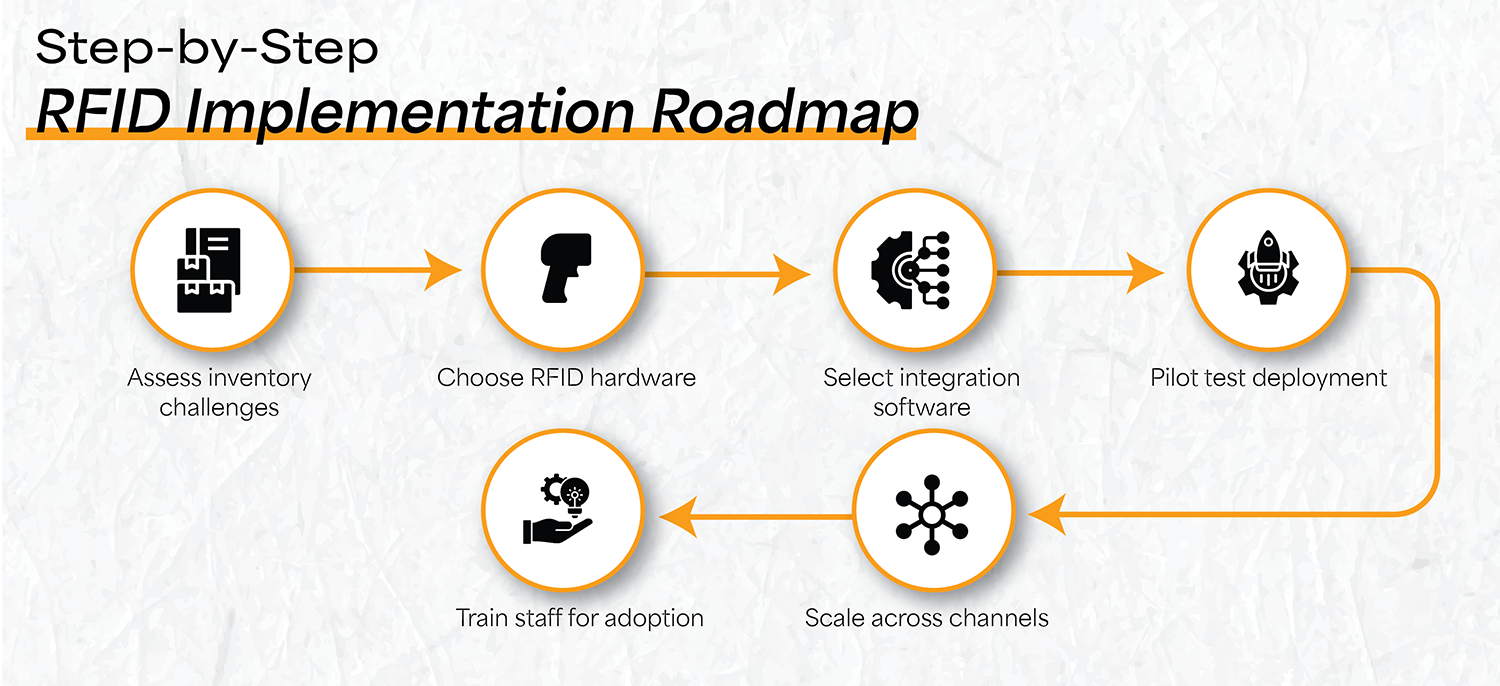
Assess inventory challenges: Begin by identifying current stock issues and setting clear goals. This helps retailers understand where RFID can add the most value, whether it’s reducing errors, improving audits, or supporting omnichannel sales.
Choose RFID hardware: Select the right tags and readers for your fashion products. UHF RFID tags are common in retail, and handheld or fixed readers ensure fast scanning across warehouses, stores, and fitting rooms.
Select integration software: Pick software that connects seamlessly with Shopify. Solutions like TagMatiks RFID Connect ensure smooth synchronization between RFID data and Shopify, keeping inventory accurate across all channels.
Pilot test deployment: Start small by testing RFID in one store or warehouse. This allows you to measure improvements, identify challenges, and refine workflows before scaling across the entire business.
Scale across channels: Once the pilot succeeds, expand RFID integration to all stores, warehouses, and online channels. This ensures consistent inventory visibility and supports true omnichannel retail operations.
Train staff for adoption: Provide training so employees understand how to use RFID readers, manage tags, and interpret dashboards. Staff adoption is critical to maximizing efficiency and ensuring smooth day-to-day operations.
Costs and ROI Analysis
Implementing RFID requires an initial investment in tags, readers, and integration software. However, the operational savings are significant, with reduced labor costs, fewer errors, and faster audits. Over time, improved stock accuracy builds customer trust, leading to higher sales and strong long-term ROI.
Future of RFID in Fashion Retail
Smart fitting rooms: RFID-enabled mirrors display available sizes instantly. Customers can check product options without leaving the fitting room, creating a seamless and interactive shopping experience.
AI forecasting: By analyzing RFID data, retailers can predict demand trends more accurately. This helps optimize stock levels, reduce waste, and ensure popular items are always available.
Sustainability: RFID tracks the lifecycle of garments, supporting eco-conscious customers. Retailers can monitor production, usage, and recycling, making sustainability a core part of RFID in fashion retail.
Blockchain integration: Combining RFID with blockchain creates transparent supply chains. Customers gain visibility into product origins, ensuring authenticity and ethical sourcing across the fashion industry.
Conclusion
RFID is more than a technology upgrade; it’s a true game-changer for Shopify fashion stores. By delivering accurate inventory, streamlining operations, and enhancing customer experiences, RFID sets the foundation for modern fashion retail. With real-time visibility and efficiency, retailers can confidently embrace the future of commerce.
Recent Posts
-

5 Tag Placement Errors Ruining RFID Accuracy
Introduction Radio Frequency Identification has become a backbone of modern inventory management, re …Sep 8th 2026 -

RFID Asset Tracking for HVAC Companies
HVAC companies rely on a wide range of tools, vehicles, and spare parts to deliver timely service. M …Aug 25th 2026 -

Fix Inventory Inaccuracy with RFID Inventory Tracking Software
Introduction Inventory inaccuracy is one of the biggest challenges businesses face today. Manual err …Aug 12th 2026