
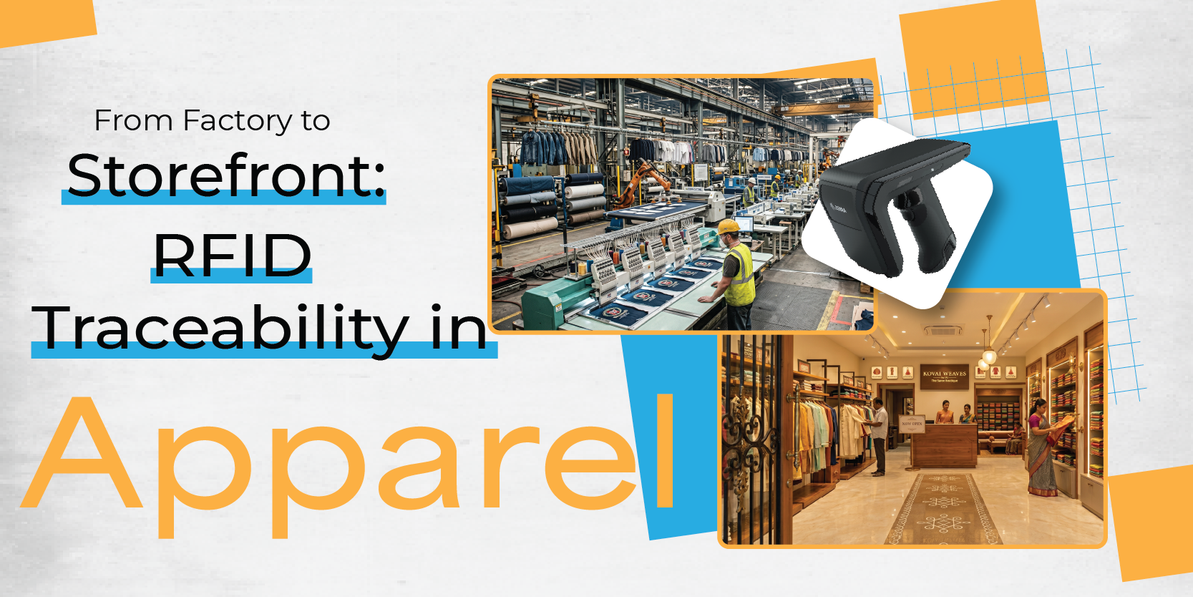
From Factory to Storefront: RFID Traceability in Apparel
Introduction
The apparel industry operates on a complex supply chain that stretches from raw material sourcing to manufacturing, distribution, and retail. Along this journey, challenges such as inventory errors, counterfeit products, and inefficient logistics often arise. Transparency and efficiency are critical for brands to stay competitive and build trust with consumers.
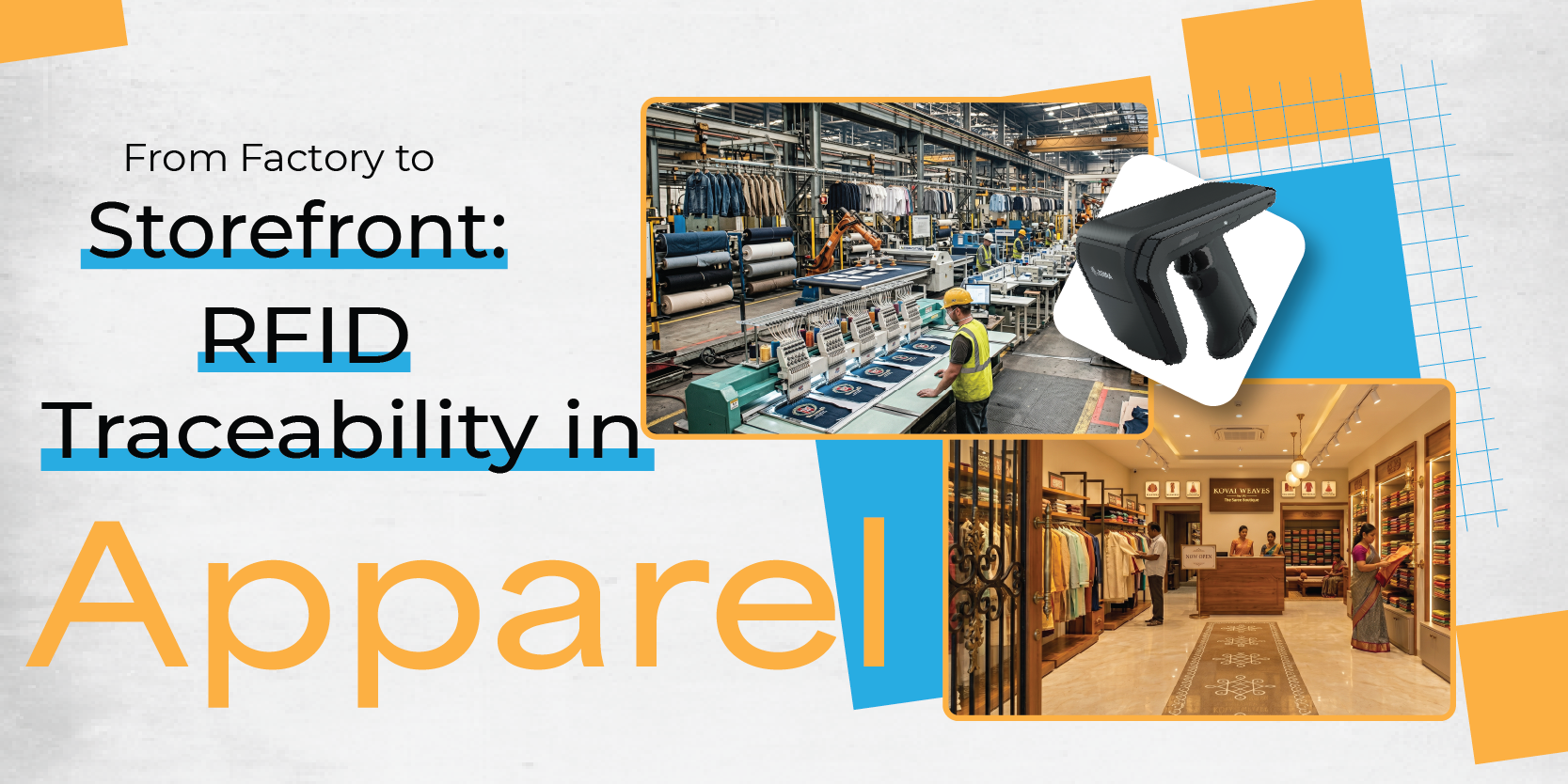
This is where RFID technology steps in as a game-changer, enabling seamless traceability from factory floors to storefront shelves.
What is RFID?
Radio Frequency Identification (RFID) is a smart tracking technology that uses electromagnetic fields to identify and monitor items. Each RFID tag has a tiny microchip and antenna that store information about the product. When a reader scans nearby, it captures this data wirelessly—no need for direct contact or line-of-sight. Unlike traditional barcodes, RFID can read multiple tags at once, making it faster and more efficient for managing apparel across factories, warehouses, and retail stores.
RFID in Apparel Manufacturing
At the factory stage, RFID tags are added to garments or packaging. These tags carry unique data, making it easier to track items accurately throughout production and distribution.
- Tagging garments: Each garment receives a unique RFID identifier. This ensures precise tracking, reduces mix-ups, and helps brands maintain accurate records of every item produced.
- Raw material tracking: Fabrics, trims, and accessories can be monitored with RFID. This visibility helps manufacturers manage resources better and avoid delays in production.
- Benefits: RFID reduces human error, speeds up inventory counts, and improves production planning. It creates a smoother workflow and helps apparel companies operate more efficiently.
RFID and Supply Chain Visibility
RFID provides real-time visibility across the entire supply chain.
Real-time visibility
RFID provides instant tracking across the apparel supply chain, helping brands monitor items at every stage and ensuring smoother movement from production to retail.
Factory to distribution centers
Shipments can be tracked in transit, reducing delays and improving delivery accuracy. This ensures products reach stores on time and in the right quantities.
Improved logistics
Automated tracking minimizes lost or misplaced goods, making logistics more reliable and efficient for apparel companies.
Shrinkage reduction
By maintaining accurate records, RFID helps prevent theft and misplacement, protecting inventory and reducing financial losses.
Brand adoption
Global apparel leaders like Zara and Decathlon use RFID to streamline operations, improve efficiency, and enhance customer satisfaction.
RFID in Retail Storefronts
RFID doesn’t stop at warehouses—it transforms the retail experience too.
Transforming the retail experience
RFID goes beyond warehouses, bringing efficiency and convenience directly into retail stores by improving how products are managed and sold.
Smart shelves
Shelves equipped with RFID automatically detect stock levels and trigger replenishment, ensuring products are always available for customers.
Customer experience
Shoppers can quickly check product availability, sizes, and colors, making their shopping journey smoother and more satisfying.
Checkout efficiency
RFID-enabled systems speed up transactions, reduce wait times, and create a seamless checkout process for both customers and staff.
Benefits of RFID Traceability in Apparel
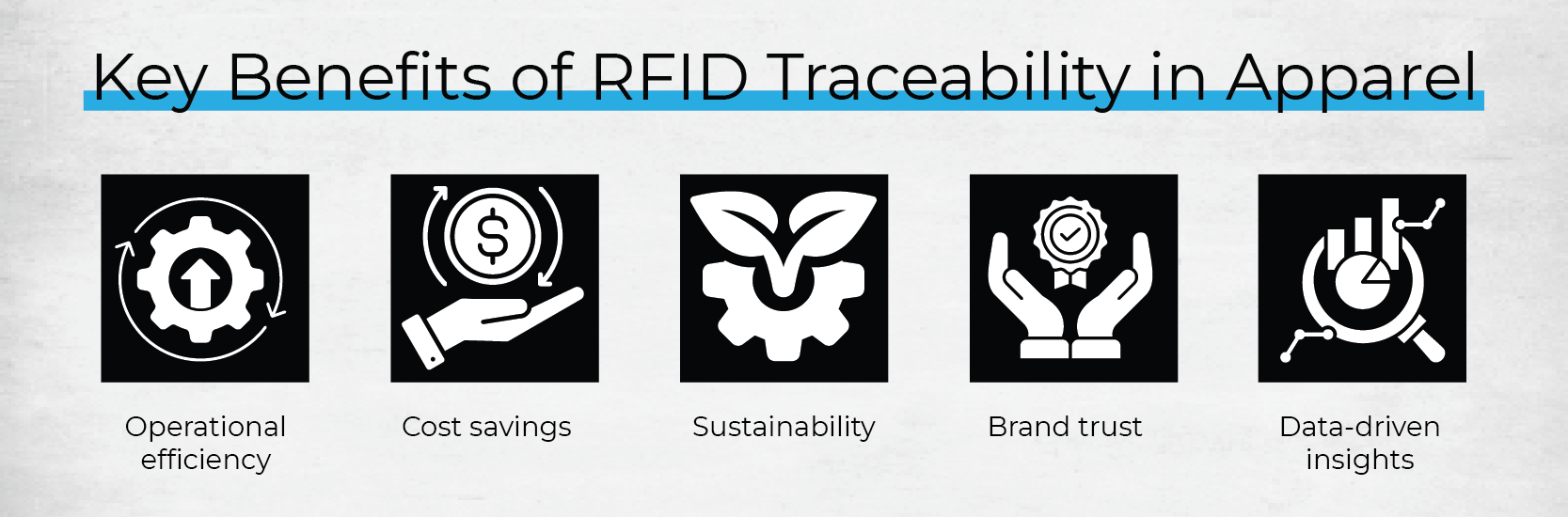
Operational efficiency
Automated RFID tracking reduces manual labor and speeds up processes. This allows apparel companies to manage inventory more accurately and focus resources on production and customer service.
Cost savings
By lowering inventory errors and streamlining operations, RFID helps brands save money. Faster processes also reduce overhead costs, making supply chains more profitable.
Sustainability
Better inventory management prevents overproduction and waste. This supports eco-friendly practices, helping apparel companies reduce their environmental footprint while meeting consumer demand responsibly.
Brand trust
Transparency through RFID reassures customers about product authenticity and ethical sourcing. This builds stronger trust and loyalty between brands and consumers.
Data-driven insights
RFID generates valuable data on product movement and customer behavior. These insights help brands forecast demand, optimize stock levels, and improve decision-making across the supply chain.
Challenges and Considerations in RFID Adoption
While RFID brings remarkable benefits to apparel supply chains, there are practical challenges to address. The initial investment in tags, readers, and software can be significant, but it often pays off through long-term efficiency gains. Integrating RFID with existing ERP or POS systems may require careful planning, yet once aligned, it creates a seamless flow of data. These considerations are part of the journey toward smarter, more transparent operations, making RFID a positive step for forward-thinking apparel brands.
Future of RFID in Apparel
The future of RFID in apparel is full of exciting possibilities as it connects with emerging technologies. With IoT and AI, smart analytics can predict demand and optimize supply chains. RFID also supports personalized shopping by enabling tailored recommendations and experiences. When combined with blockchain, it ensures tamper-proof records of product journeys, strengthening transparency and trust. Together, these innovations make RFID a powerful tool for building smarter, more customer-focused apparel businesses.
Conclusion
RFID is transforming the apparel industry by delivering end-to-end visibility, efficiency, and trust. From factory floors to retail stores, it empowers brands to manage inventory smarter, streamline operations, and enhance customer experiences. By embracing RFID, apparel companies can build transparency, reduce waste, and stay competitive in a fast-changing market.
Recent Posts
-
5 Tag Placement Errors Ruining RFID Accuracy
Introduction Radio Frequency Identification has become a backbone of modern inventory management, re …Sep 8th 2026 -

RFID Asset Tracking for HVAC Companies
HVAC companies rely on a wide range of tools, vehicles, and spare parts to deliver timely service. M …Aug 25th 2026 -
Fix Inventory Inaccuracy with RFID Inventory Tracking Software
Introduction Inventory inaccuracy is one of the biggest challenges businesses face today. Manual err …Aug 12th 2026