
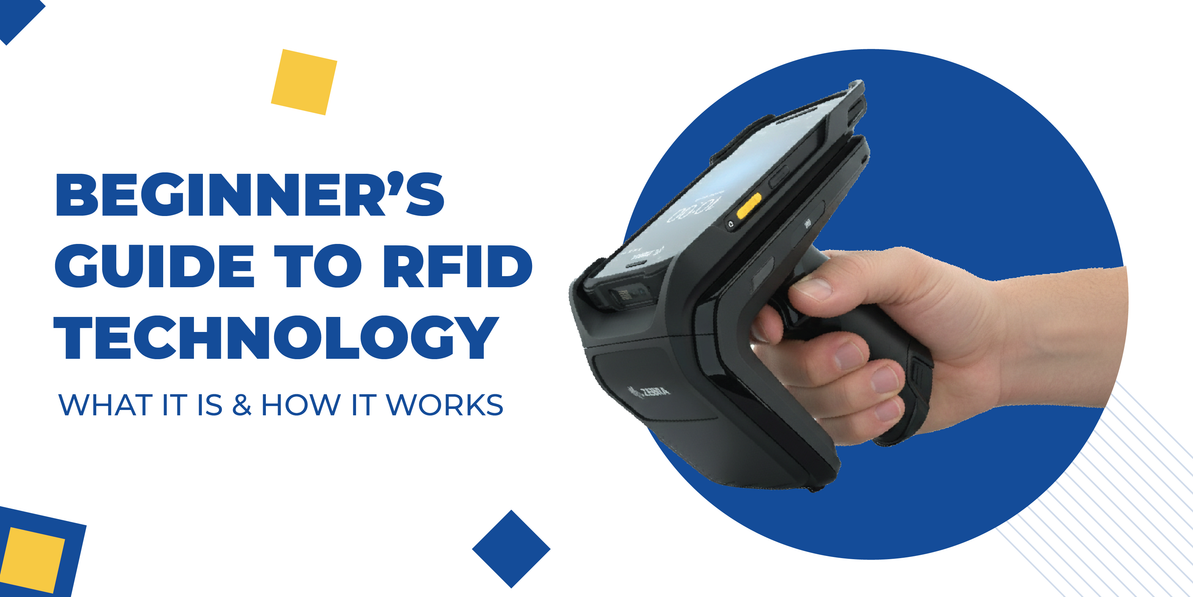
Beginner’s Guide to RFID Technology – What It Is & How It Works
Introduction
Have you ever noticed how warehouses can track hundreds of boxes moving in and out without scanning each one manually? The technology behind this is often RFID. RFID stands for Radio Frequency Identification. It’s a system that uses radio waves to identify and track objects automatically.
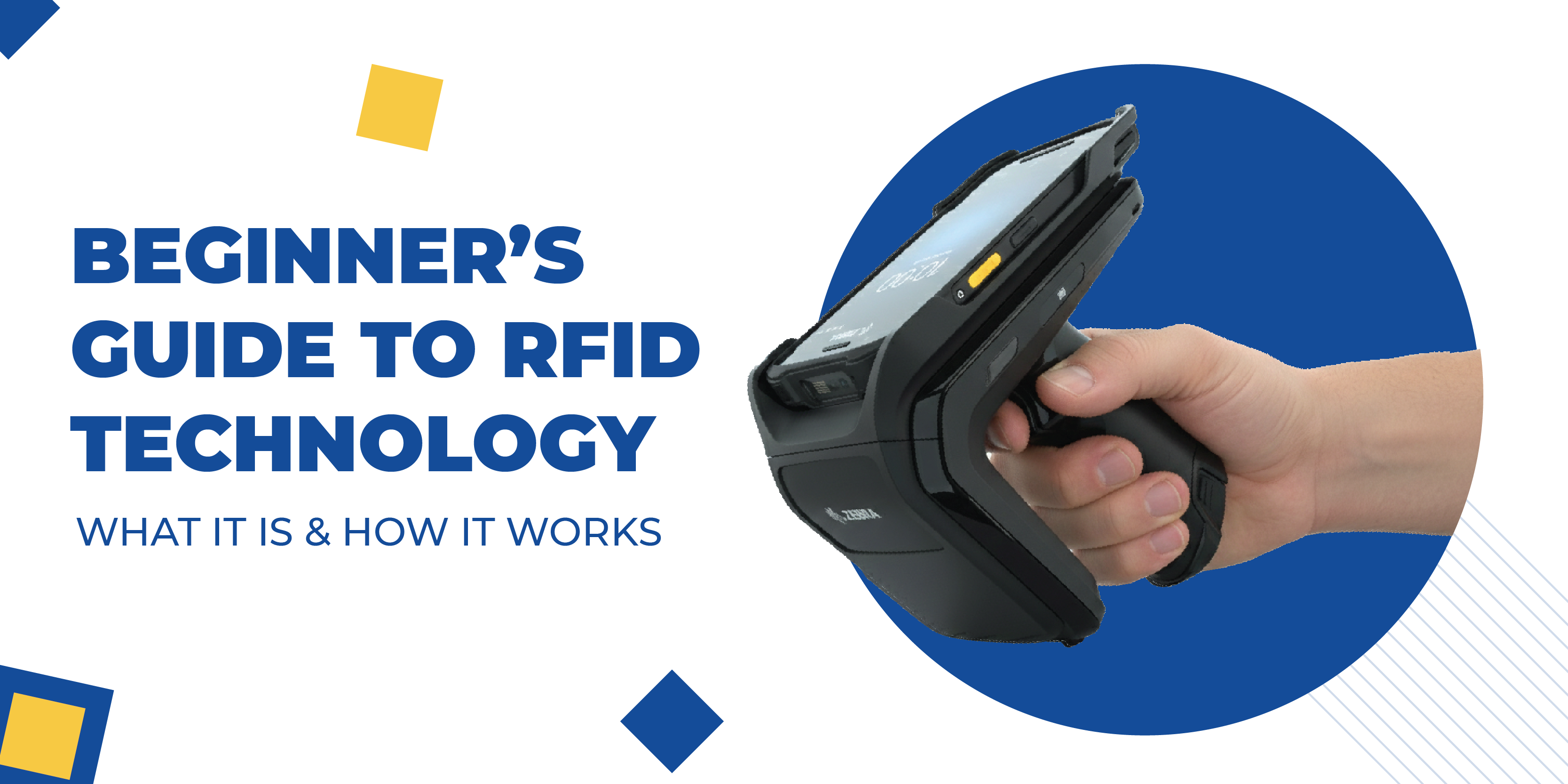
For beginners, learning about RFID is useful because it’s becoming part of everyday life. You’ll find it in retail, healthcare, transportation, and even in smart city projects. In this guide, we’ll explain RFID step by step, using simple language and practical examples so you can easily understand how it works and why it matters.
What is RFID?
RFID (Radio Frequency Identification) is a technology that uses radio waves to transfer data between two parts: a small tag and a reader. The reader sends out radio signals, and the tag responds by sending back the information stored on it.
Unlike barcodes, RFID doesn’t need a direct line of sight. That means you don’t have to point a scanner directly at each item. RFID can read multiple tags at once, making it faster and more accurate.
In simple terms, RFID is a smarter, wireless version of a barcode that makes tracking and managing items much easier.
Components of RFID Systems
An RFID system has several parts working together:
RFID Tags
-
Types based on power source:
- Passive Tags: These tags have no battery and rely on signals from the reader for activation. They are low-cost, lightweight, and commonly used in retail and access control.
- Active Tags: Powered by an internal battery, active tags can transmit signals over longer distances. They are ideal for logistics, vehicle tracking, and industrial applications requiring continuous monitoring.
- Semi-Passive Tags: Also called battery-assisted passive tags, they use a small battery to support the chip but still depend on the reader’s signal. Useful for specialized tracking needs.

Types based on Speciality
- Paper-based Tags
- Polymer-based Tags
- Ceramic Tags or Rugged Tags
- Plastic Tags
- Metal Tags/Metal Mount Tags
- Epoxy Tags
- Flexible Tags
- Cable RFID Tags
- Heat Sealed RFID Tags
- E-Seal RFID tag
- Laundry RFID tags
- Structure: Each RFID tag contains a microchip that stores data and an antenna that sends and receives signals. Together, they enable wireless communication with RFID readers.
- Use cases: RFID tags are widely used for tracking retail products, authenticating ID cards, and monitoring shipping containers, making inventory and asset management faster and more reliable.
- How to choose: Selection depends on application needs—consider range, durability, and cost. Passive tags suit everyday retail, while active tags fit industrial or long-distance tracking requirements.
RFID Readers
- Types: RFID readers can be fixed, mounted in one place for continuous scanning, or handheld, offering portability for flexible use in warehouses, retail, or field operations.
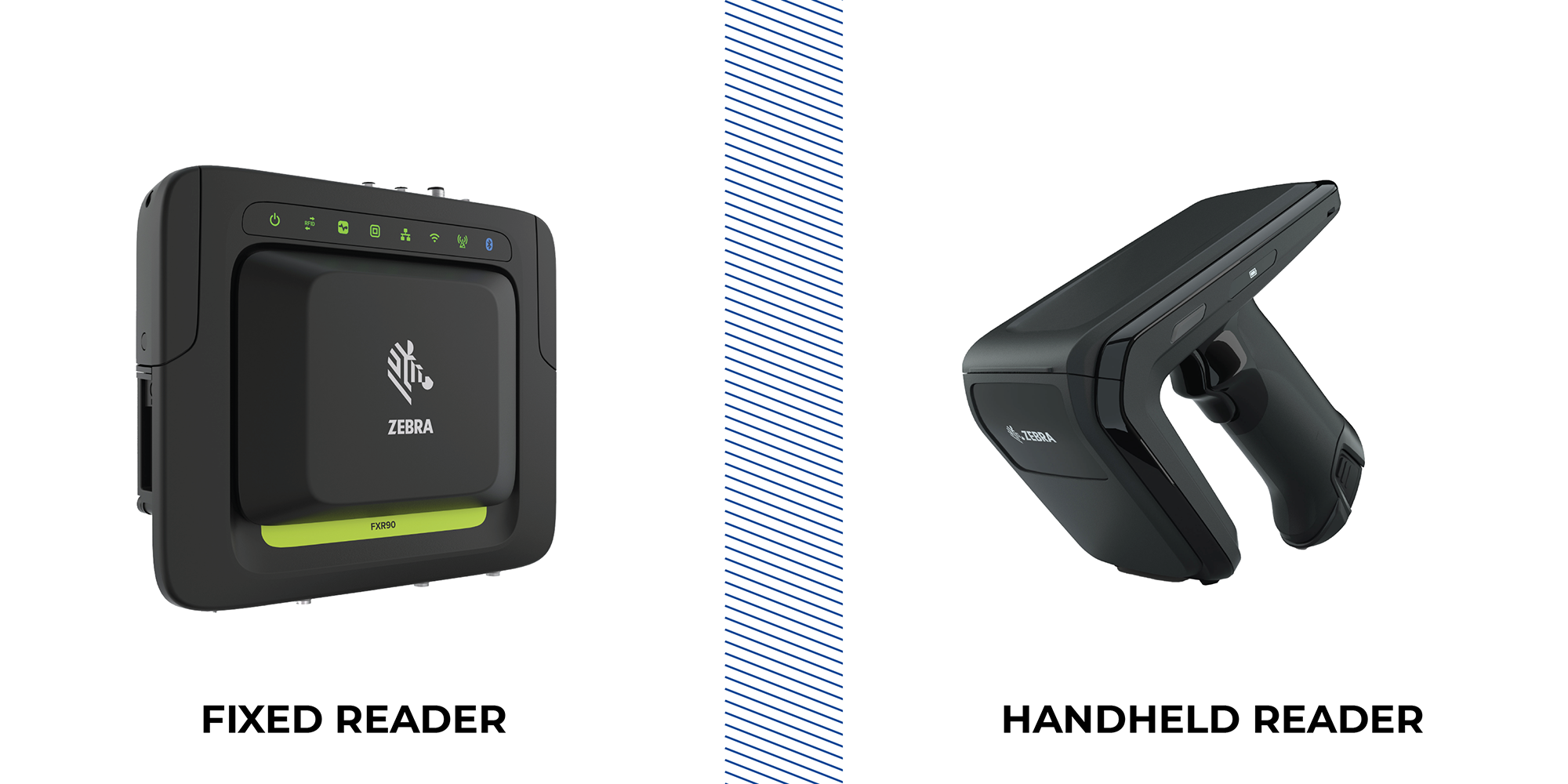
- Function: Readers capture signals from RFID tags and send the collected data to software systems. This enables real-time tracking, monitoring, and integration with business applications.
- How to Choose: Selection depends on mobility needs and environment. Fixed readers suit large-scale operations, while handheld readers are better for flexible, on-the-go scanning tasks.
RFID Antennas
- Types: RFID antennas come in various forms, including linear, circular, and patch antennas. Each type is designed for specific environments and tag-reading requirements.
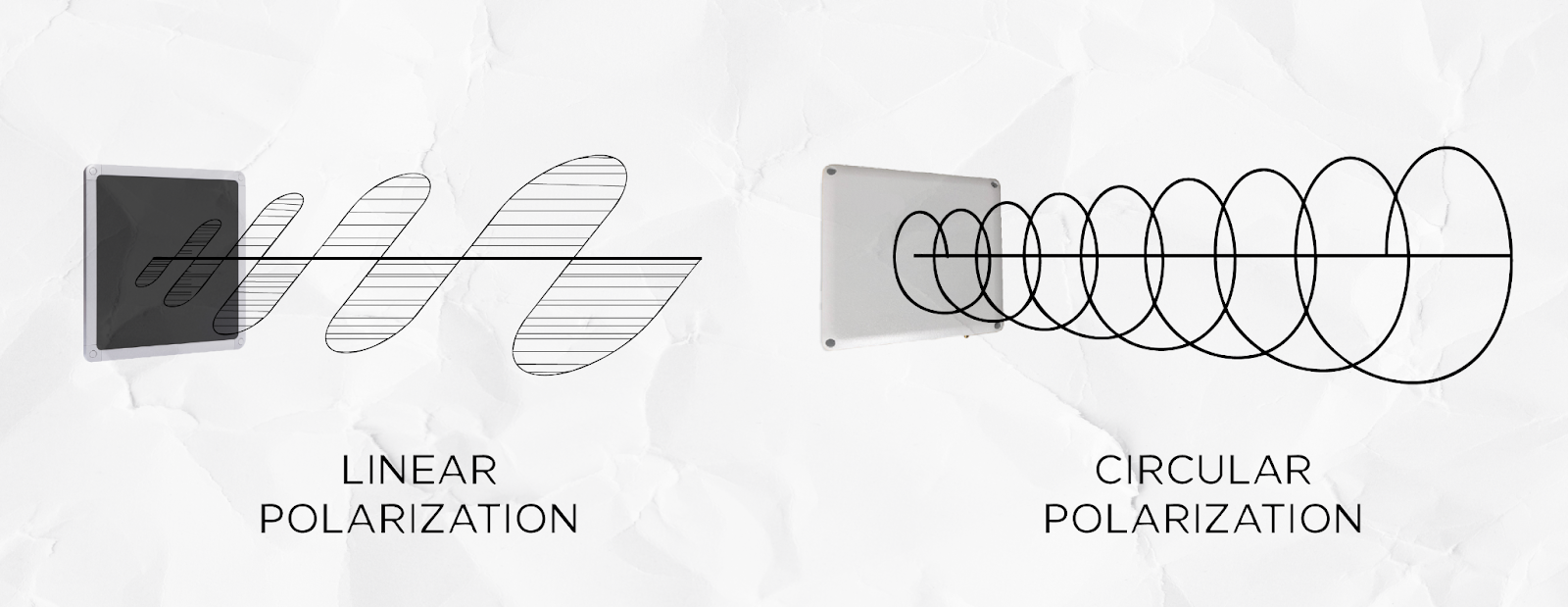
- Role: Antennas are essential in RFID systems because they transmit signals from the reader and receive responses from tags, enabling smooth communication and accurate data transfer.
- Placement: Proper antenna placement is critical for accuracy. They are often installed near entry points, shelves, or gates to ensure reliable tag detection and minimize signal interference.
- How to Choose: Select antennas based on tag frequency, coverage area, and environment. Matching the right type ensures consistent performance and reduces errors in industrial or retail settings.
RFID Cables
RFID cables connect antennas to readers, carrying signals efficiently. Different cable types are used depending on the required distance, signal strength, and installation environment.
RFID Structures
RFID Portals: RFID portals are installed at warehouse doors or entry points. They automatically scan items passing through, helping track inventory movement and improving supply chain visibility.
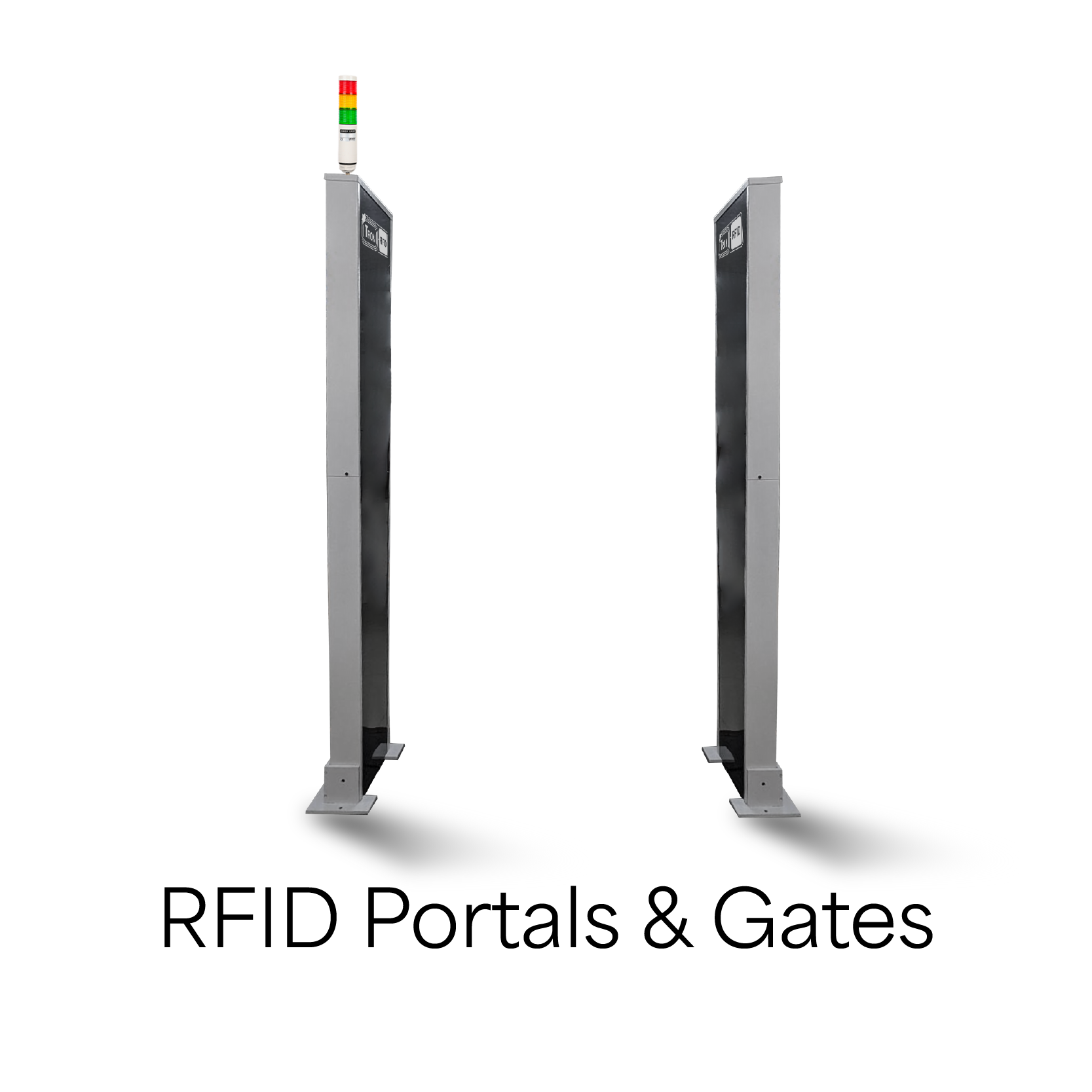
RFID Tunnels: RFID tunnels are used on conveyor belts. They scan multiple items as they move, ensuring fast, accurate tracking in logistics, packaging, and manufacturing operations.

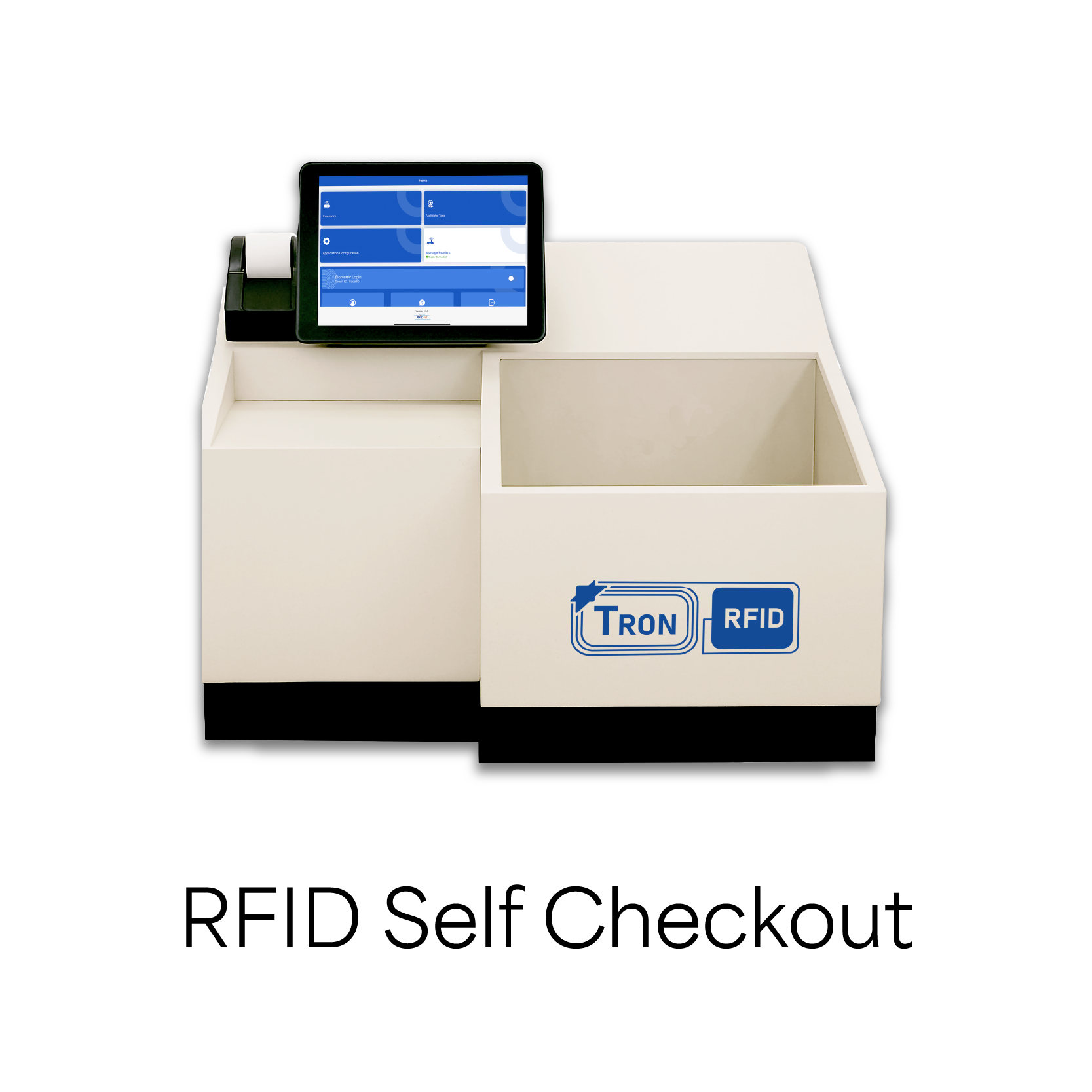
RFID Self-Checkout Systems: In retail, RFID-enabled self-checkout systems let customers scan items instantly without barcodes. This reduces waiting time, improves accuracy, and enhances the shopping experience.
RFID Smart Cabinets: Hospitals and labs use RFID smart cabinets to track medical supplies or equipment. They ensure availability, prevent loss, and support efficient inventory management.
RFID Software/Database
RFID software collects and organizes tag data, then integrates it with business systems to support inventory management, asset tracking, and security operations seamlessly.
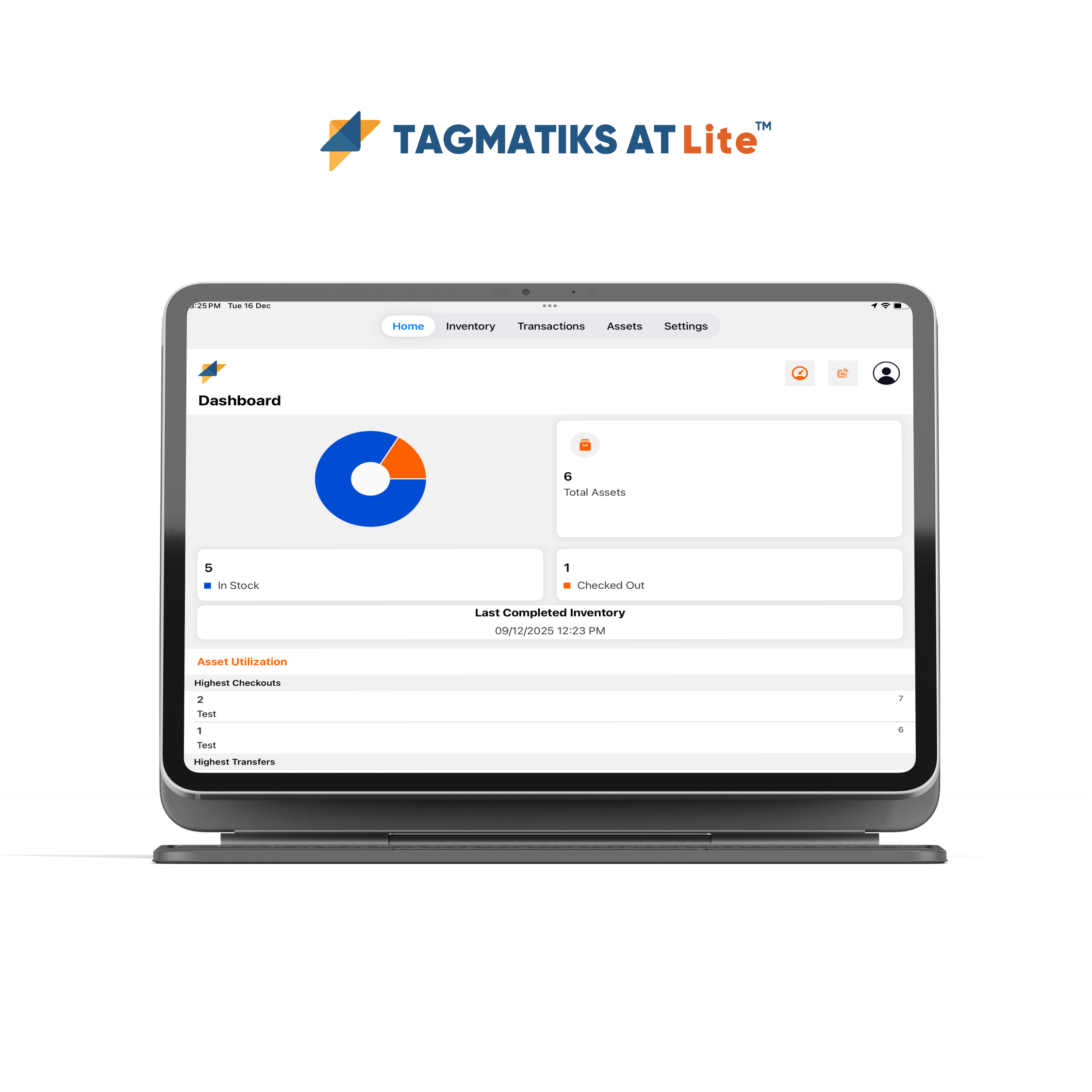
TagMatiks AT Lite: Designed for small businesses, this RFID asset tracking software helps manage assets efficiently, offering easy setup, reporting, and visibility without complex infrastructure.
TagMatiks Wedge: A lightweight RFID software solution for inventory management. It captures tag data directly into spreadsheets or databases, making it simple to track items in real time.
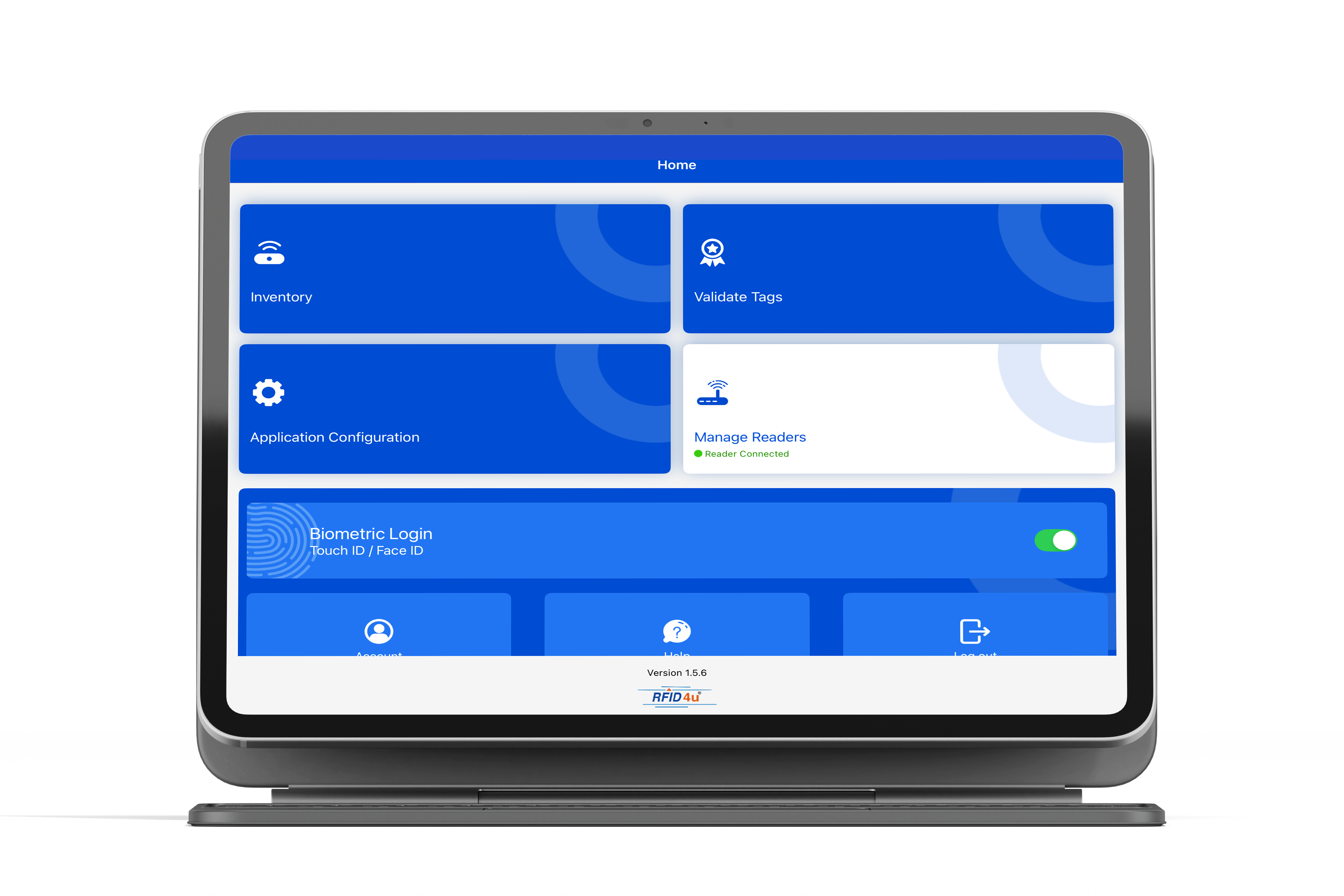
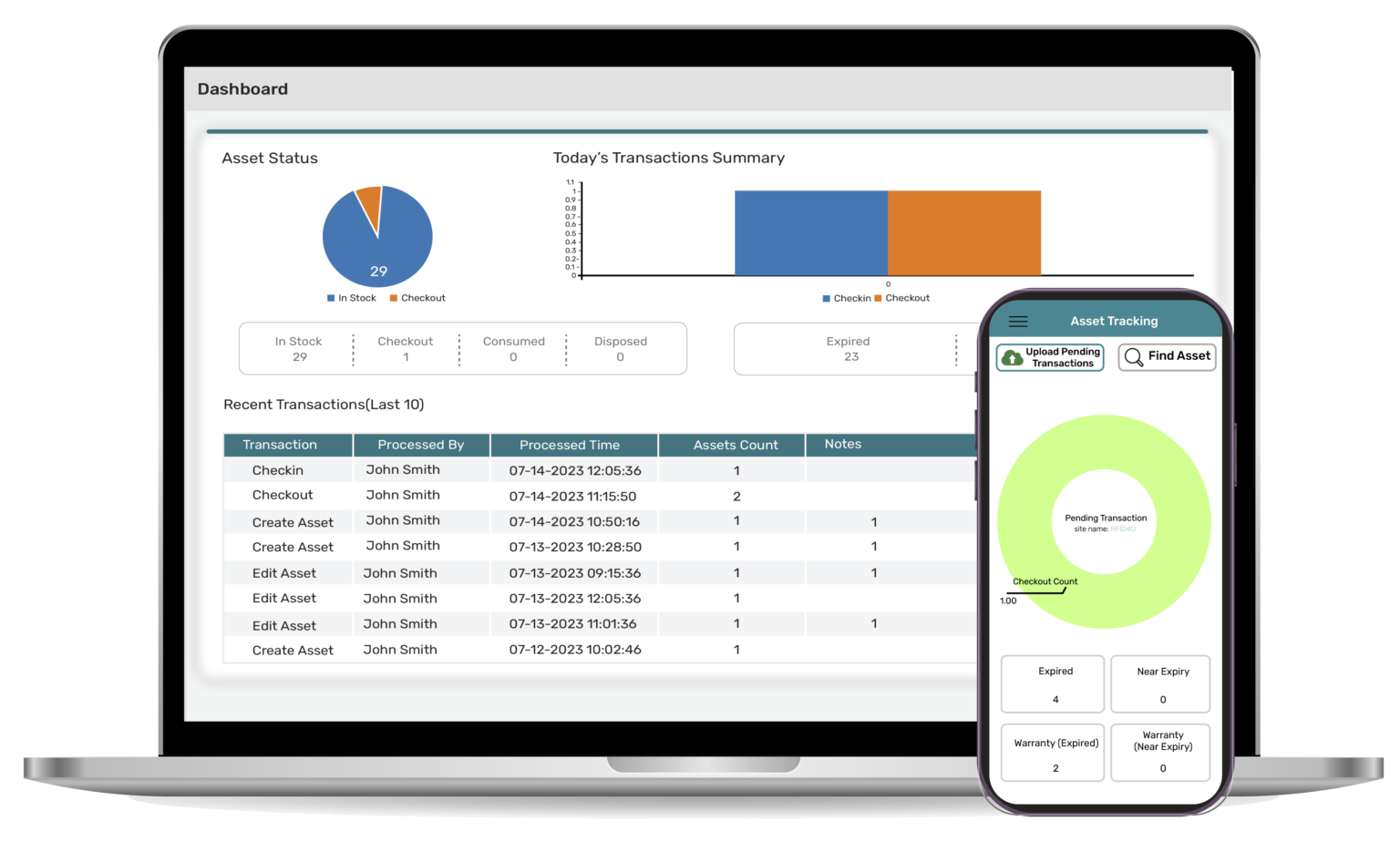
TagMatiks Asset Tracking: Built for enterprises, this software provides advanced RFID asset tracking features, including detailed reporting, scalability, and integration with existing systems for large-scale operations.
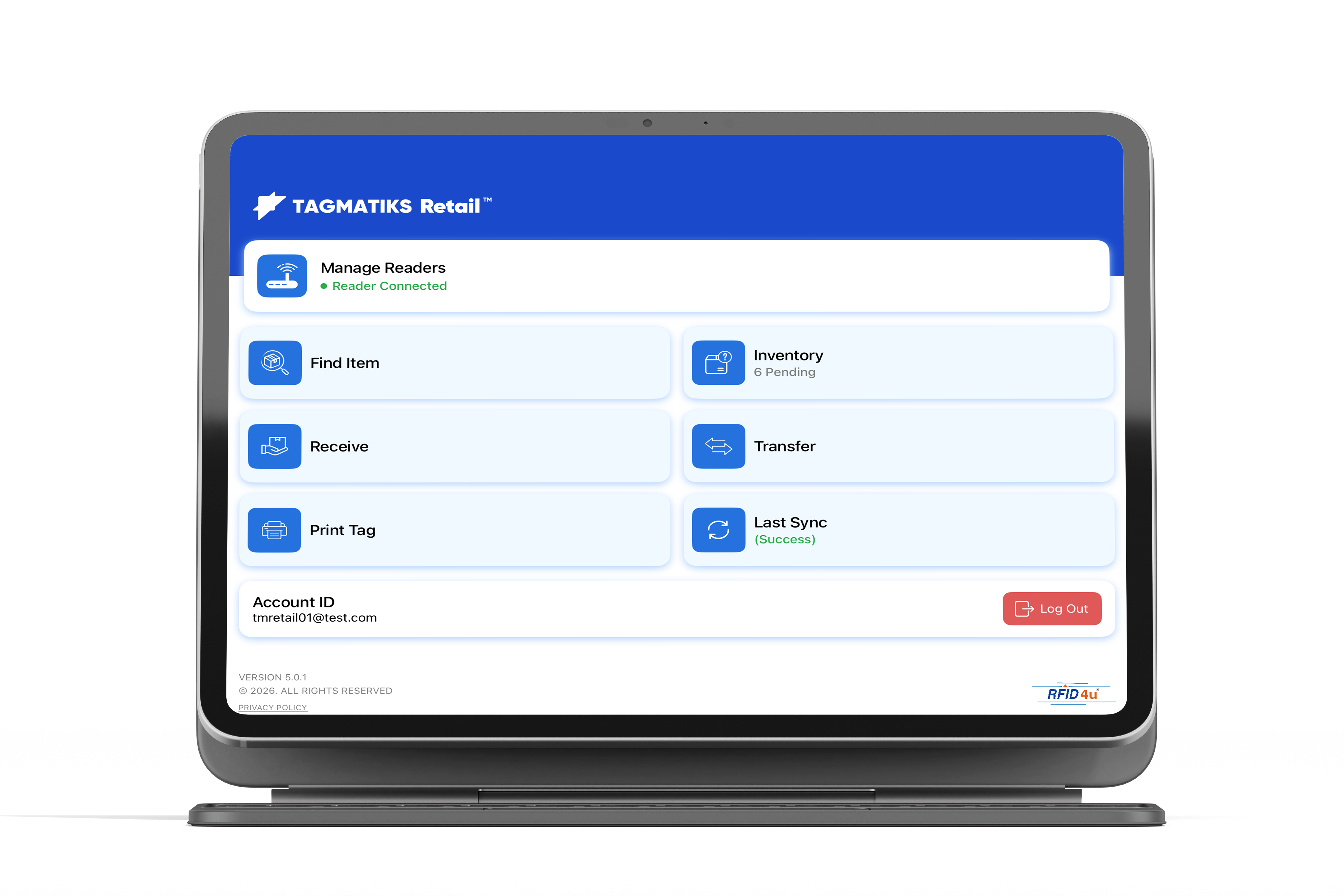
TagMatiks Retail: Tailored for retailers, this RFID software improves inventory accuracy, reduces shrinkage, and enhances customer experience by enabling faster checkouts and better stock visibility.
How Does RFID Work?
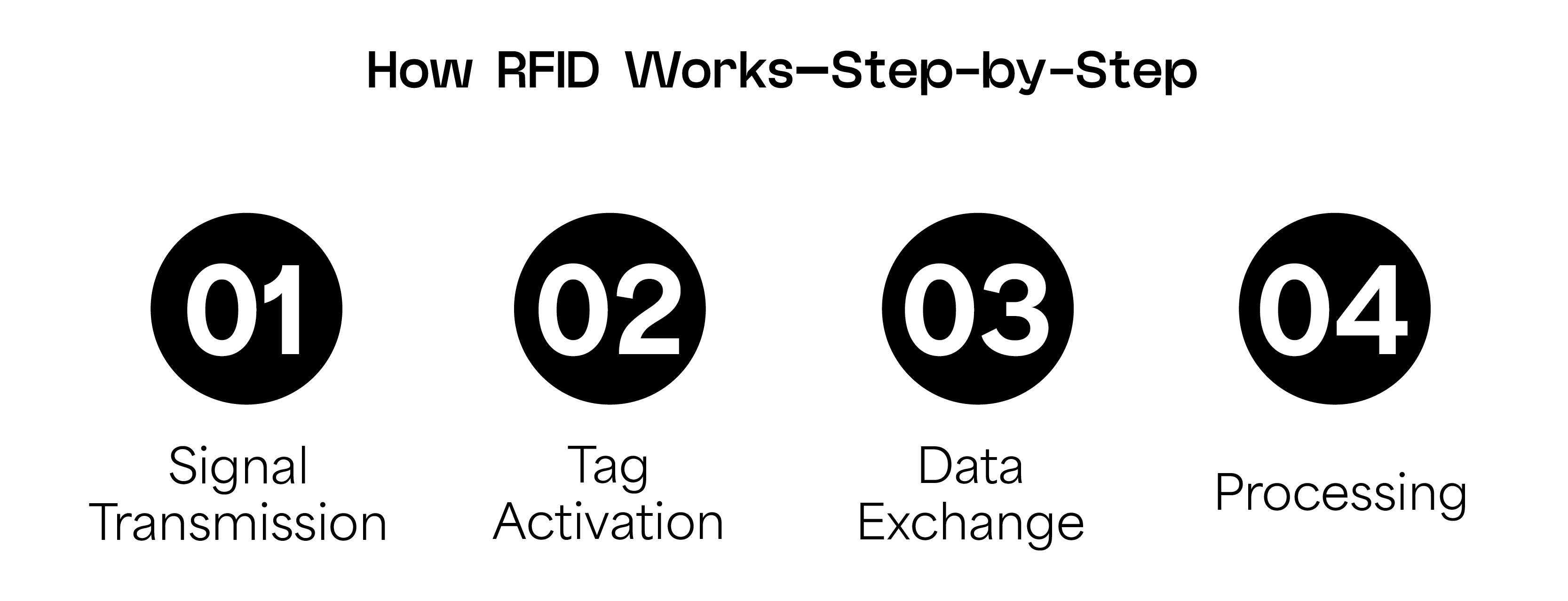
RFID works through a simple process: the reader detects and reads tags automatically, then communicates the captured data to software systems. The software organizes and stores this information, integrating it with business applications for inventory tracking, asset management, or security monitoring. This streamlined flow reduces manual effort, improves accuracy, and enables real-time visibility across operations.
Types of RFID Systems
By Frequency
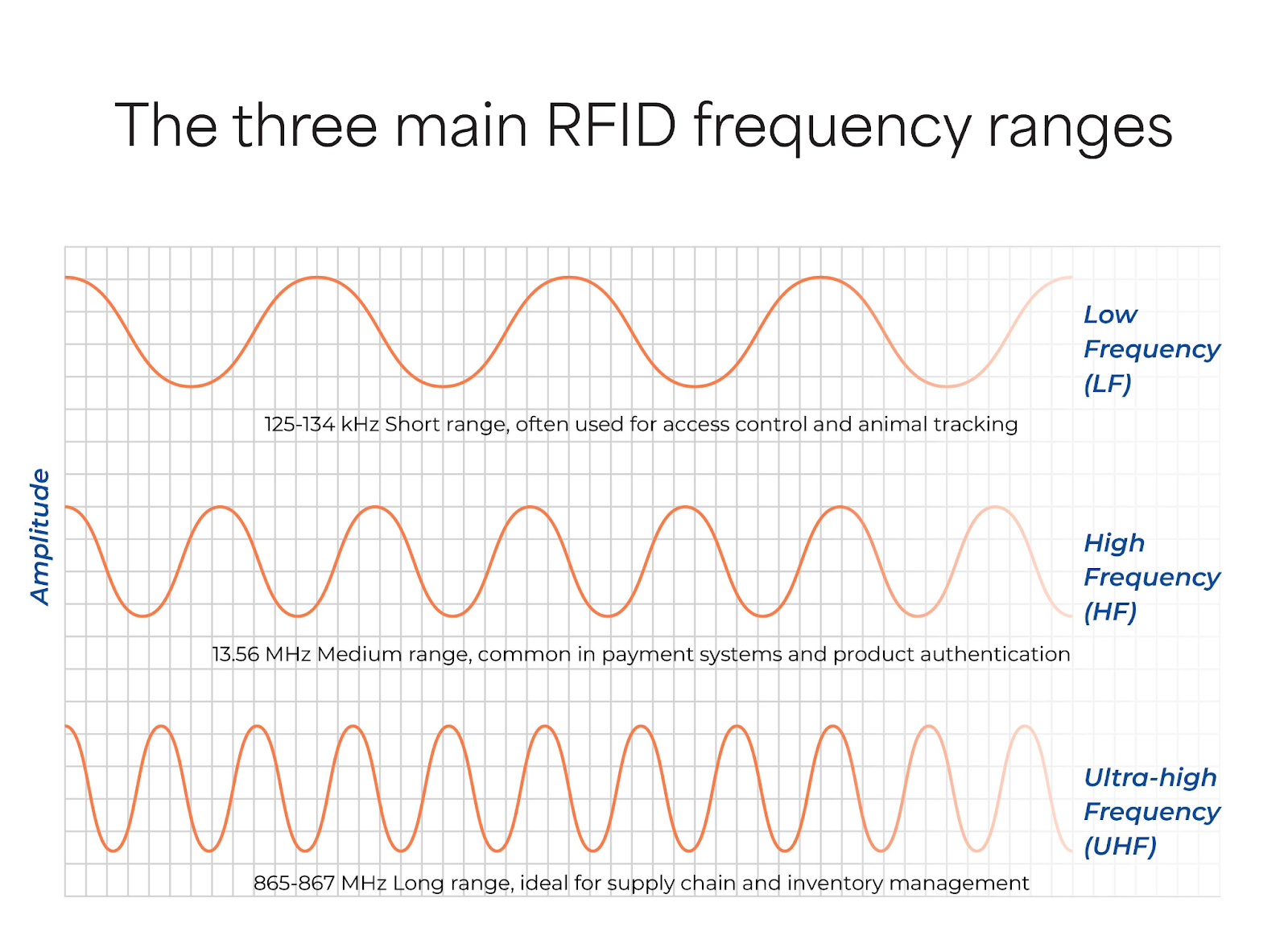
Low Frequency (LF, 125–134 kHz)
LF RFID systems have short read ranges up to 10 cm with a slow speed, and low interference. They are commonly used for access control cards, animal identification, and environments where signals must penetrate materials like water or metal.
High Frequency (HF, 13.56 MHz)
HF RFID systems offer medium-range up to 1 meter with moderate speed and medium interference. They are widely used in library book management, payment cards, and smart tickets, providing reliable communication in consumer and educational applications.
Ultra-High Frequency (UHF, 865-967 MHz)
UHF RFID systems provide long-range up to 12 meters with fast speed and higher interference. They are popular in supply chain management, warehousing, and retail, enabling businesses to track large volumes of items quickly and efficiently.
Microwave (2.45 GHz)
Microwave RFID systems deliver very long-range capabilities and fast communication. They are often used in toll collection, vehicle tracking, and transportation systems where rapid identification and movement monitoring are essential.
By Power Source
- Passive: No battery, cheaper, shorter range.
- Active: Battery-powered, longer range, higher cost.
- Semi-Passive (BAP): Battery-assisted but still triggered by the reader.
Advantages of RFID Technology
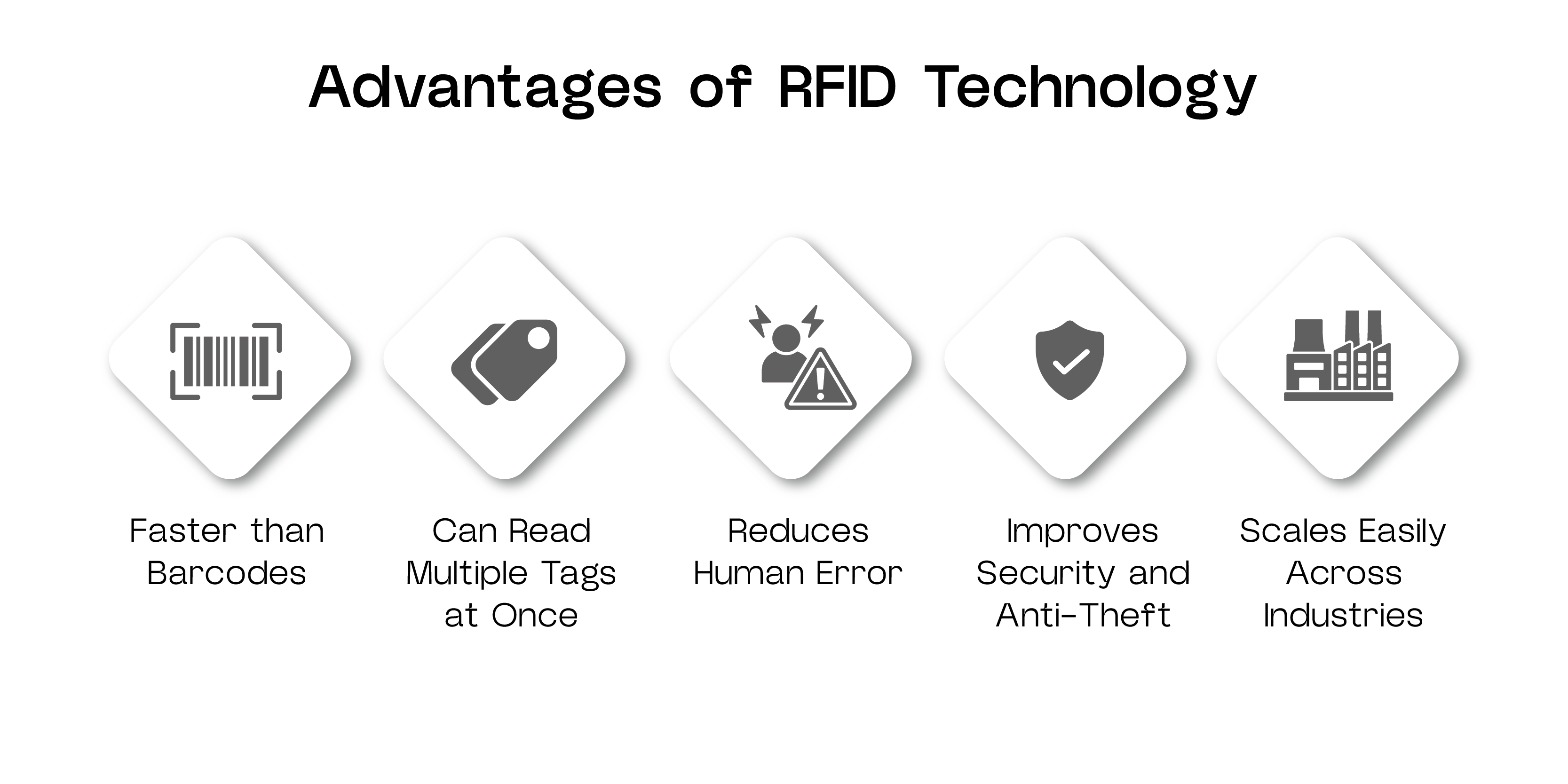
Faster than Barcodes
RFID systems can capture data instantly without needing direct line-of-sight scanning. This makes item identification quicker than barcodes, saving time in retail, logistics, and manufacturing operations.
Can Read Multiple Tags at Once
Unlike barcodes, which require scanning one item at a time, RFID readers can process dozens of tags simultaneously. This improves efficiency in warehouses, supply chains, and large-scale inventory management.
Reduces Human Error
Automated RFID scanning minimizes mistakes caused by manual entry or barcode misreads. This ensures more accurate data collection, leading to better decision-making and smoother business operations.
Improves Security and Anti-Theft
RFID technology helps track items in real time, reducing theft and unauthorized movement. Retailers and healthcare providers use it to secure valuable products, equipment, and sensitive assets.
Scales Easily Across Industries
RFID systems can be adapted for small businesses or large enterprises. From retail stores to global supply chains, the technology scales effectively, supporting growth and diverse industry requirements.
Limitations & Challenges
While RFID requires higher upfront investment due to the cost of tags, readers, and infrastructure, businesses often see strong long-term ROI through improved efficiency and reduced labor costs. Performance can sometimes be affected by interference from metals or liquids, but modern RFID solutions and proper system design help minimize these issues, ensuring reliable accuracy.
Real-World Applications of RFID
Retail
RFID helps retailers track inventory in real time, reducing stockouts and improving customer satisfaction. It also supports anti-theft measures by monitoring product movement, ensuring better security and operational efficiency across stores.
Healthcare
Hospitals use RFID to track medical equipment and manage supplies. This improves patient safety, reduces equipment loss, and ensures critical items are always available when needed for treatment or emergencies.
Logistics/Warehousing
RFID enhances supply chain visibility by automatically scanning goods as they move through portals or conveyor belts. It reduces manual errors, speeds up operations, and provides accurate data for inventory and shipment tracking.
Manufacturing
RFID systems track raw materials, tools, and finished products throughout production. This ensures quality control, prevents bottlenecks, and supports lean manufacturing practices by providing real-time insights into asset usage and workflow efficiency.
Education
RFID is used to manage books, journals, and student ID cards. It simplifies borrowing and returning processes, reduces manual effort, and improves security by preventing unauthorized removal of materials from libraries or campuses.
Future of RFID Technology
The future of RFID looks promising as it integrates with IoT and AI to create smarter, automated systems. In smart cities, RFID can support waste management by tracking disposal and recycling processes more efficiently. With smaller and cheaper tags, adoption will expand across industries. Additionally, RFID promotes sustainability by reducing waste, optimizing supply chains, and improving resource management.
Beginner Tips for Getting Started
- Start Small with Pilot Projects: Begin with a limited RFID application, such as inventory tracking. This helps test performance, identify challenges, and build confidence before scaling to larger, more complex operations.
- Pick the Right Frequency: Choose LF, HF, or UHF depending on range and environment. LF suits short-range tasks, HF works for medium-range uses, while UHF is ideal for long-range supply chain tracking.
- Plan for Scalability and Integration: Design your RFID system with future growth in mind. Ensure it can integrate smoothly with existing business software, supporting expansion across departments, warehouses, or multiple locations.
- Work with RFID Solution Providers: Partnering with experienced providers ensures proper setup, training, and support. They help select the right hardware, software, and configurations, reducing risks and ensuring smoother implementation.
Conclusion
RFID is far more than a trending term—it is a transformative technology reshaping industries worldwide. For beginners, understanding its basics provides valuable insight into modern supply chains, smart systems, and everyday conveniences. With growing adoption and proven efficiency, now is the ideal time to explore RFID and discover how it can enhance your business operations or daily life.
Recent Posts
-
RFID vs Barcode in Retail: A Side-by-Side Comparison
Introduction Retail is transforming at a rapid pace, and at the center of this change lies inventory …Mar 6th 2026 -
What Is an RFID Self-Checkout System? A Complete Guide for Retailers
Introduction Retail checkout has seen a remarkable transformation over the years. What started with …Feb 27th 2026 -
Upgrade from Barcodes to RFID on Shopify: A Retailer’s Guide
Retailers on Shopify are beginning to question whether barcodes are enough. With rising customer exp …Feb 24th 2026