

How RFID Anti-Theft Tags Revolutionize the Retail Industry
Introduction
Retail theft and inventory shrinkage are challenges that every store owner faces. Whether it’s shoplifting, employee theft, or misplaced items, these losses eat directly into profits and can damage customer trust. Traditional solutions like CCTV cameras or manual bag checks often fall short—they’re reactive, not proactive.
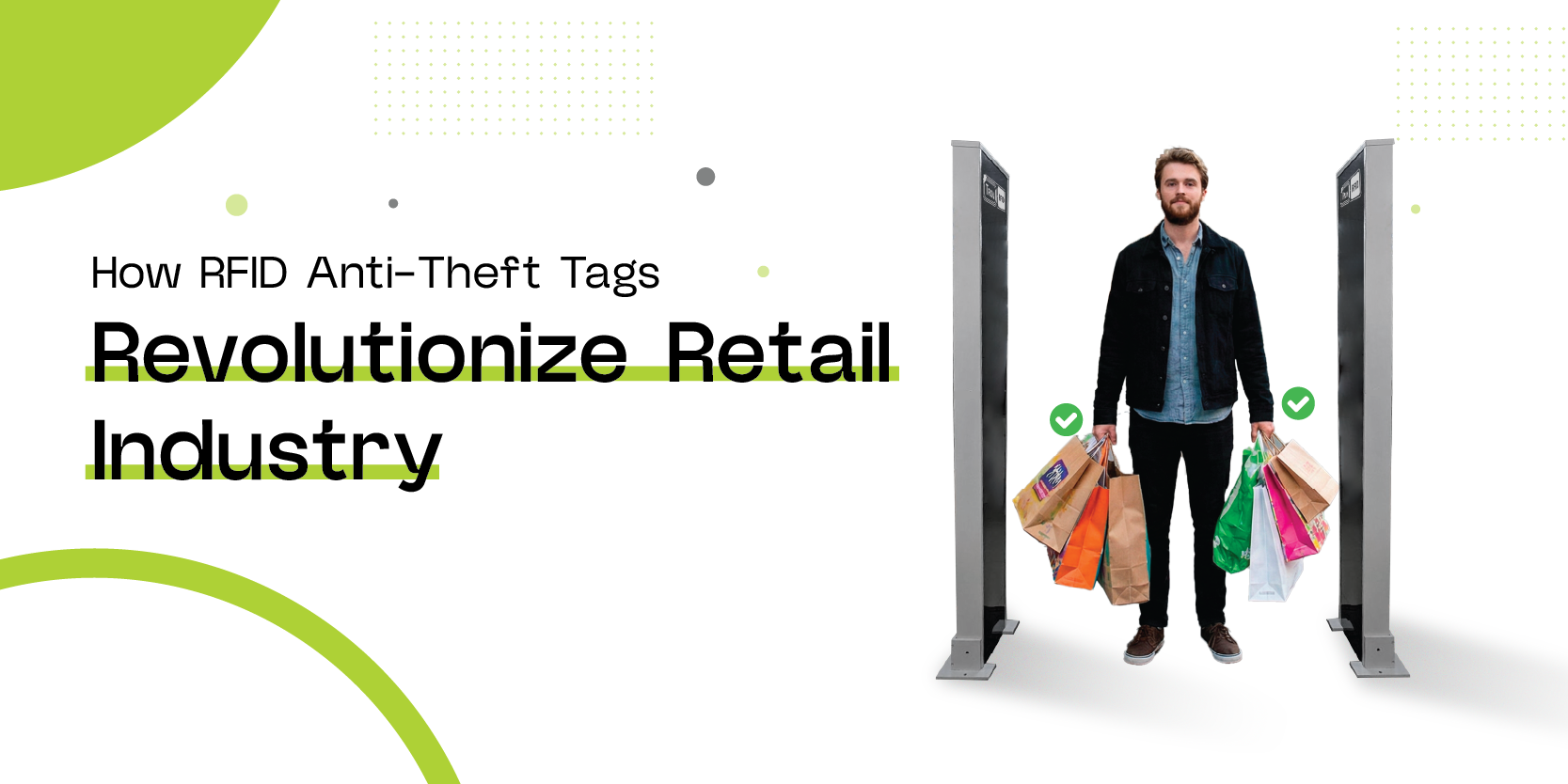
But what if there was a smarter way? Imagine cutting losses, improving customer experience, and streamlining operations—all with one technology. That’s exactly what RFID anti-theft tags bring to the table.
What Are RFID Anti-Theft Tags?
RFID anti-theft tags are tags that use radio frequency signals to identify and protect retail products. Alongside Electronic Article Surveillance (EAS) tags, they provide advanced protection. Unlike barcodes, they don’t need direct scanning—readers detect them automatically. If an item leaves the store without deactivation, the system instantly triggers an alert to prevent theft.
Examples:
- Clothing stores use EAS-enabled RFID tags to stop customers from switching or tampering with tags to avoid paying the correct price.
- Electronics retailers secure high-value gadgets.
- Supermarkets track inventory and reduce shrinkage.
The Retail Theft Problem
Retail theft is a global issue. According to industry reports, shrinkage costs retailers billions of dollars annually. Shoplifting and employee theft account for a significant portion of retail losses, especially in fashion and electronics. This is where RFID in retail offers a smarter way to combat theft and protect profits.
- Impact on profits: Even a small percentage of shrinkage can wipe out margins.
- Customer trust: Frequent theft incidents can lead to stricter checks, which frustrate genuine customers.
- Limitations of traditional methods: CCTV cameras only record theft after it happens. Manual checks are time-consuming and can harm customer experience.
How RFID Anti-Theft Tags Work in Retail
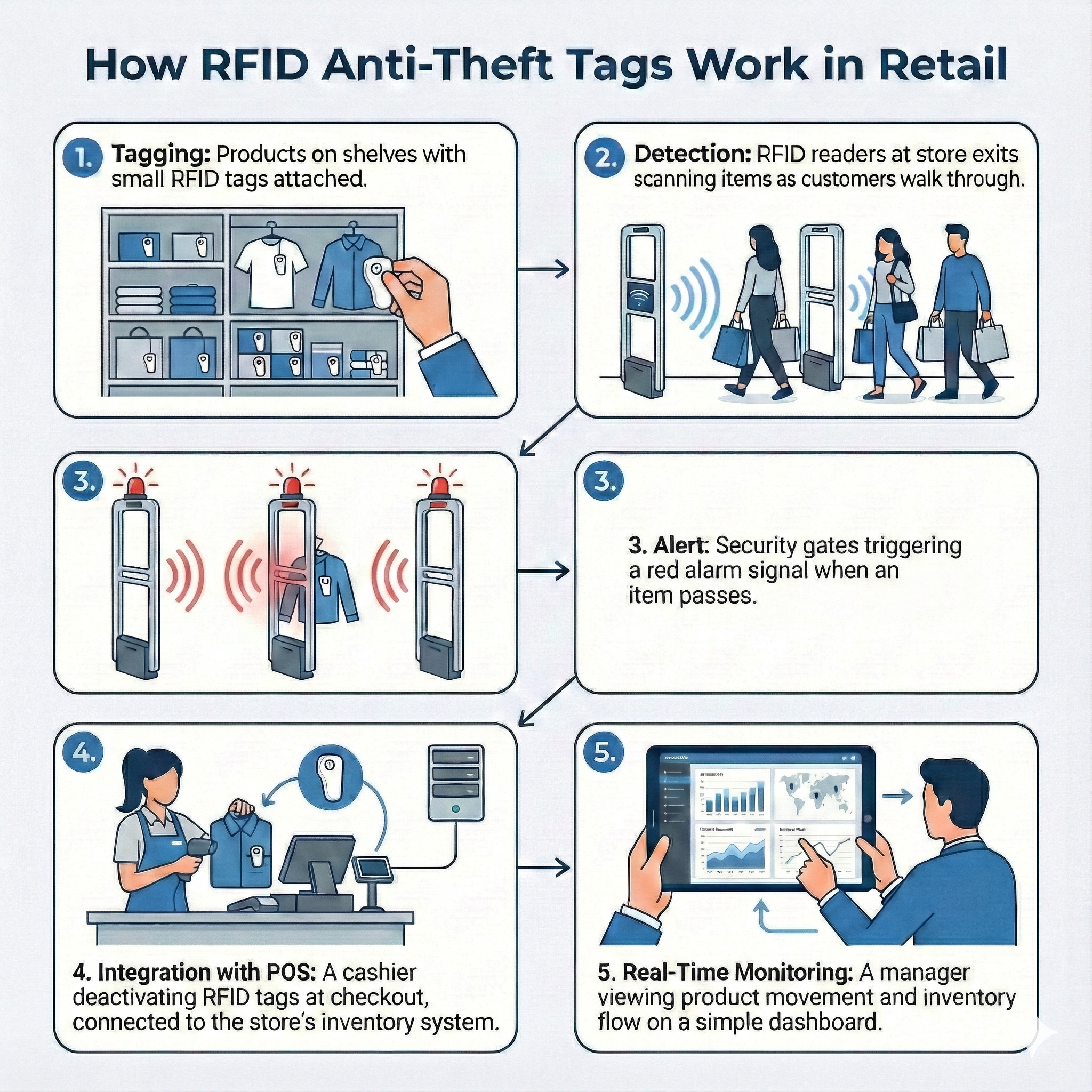
Here’s how the system operates step by step:
- Tagging: Every product is equipped with an RFID anti-theft tag, making it easy to track items and prevent unauthorized removal from the store.
- Detection: EAS RF readers placed at store exits automatically scan for EAS RFID tags, ensuring no product leaves without proper checkout or deactivation.
- Alert: If a tagged item passes through security gates without deactivation, the system instantly triggers an alarm to notify staff and prevent theft.
- Integration with POS: At checkout, cashiers deactivate or remove tags, linking sales directly with inventory systems for smooth and secure transactions.
- Real-Time Monitoring: Managers can track product movement across shelves and stockrooms, gaining insights into inventory flow and reducing shrinkage effectively.
Together, these steps ensure strong security while maintaining convenience, protecting profits and enhancing customer shopping experiences.
Key Benefits for Retail Businesses
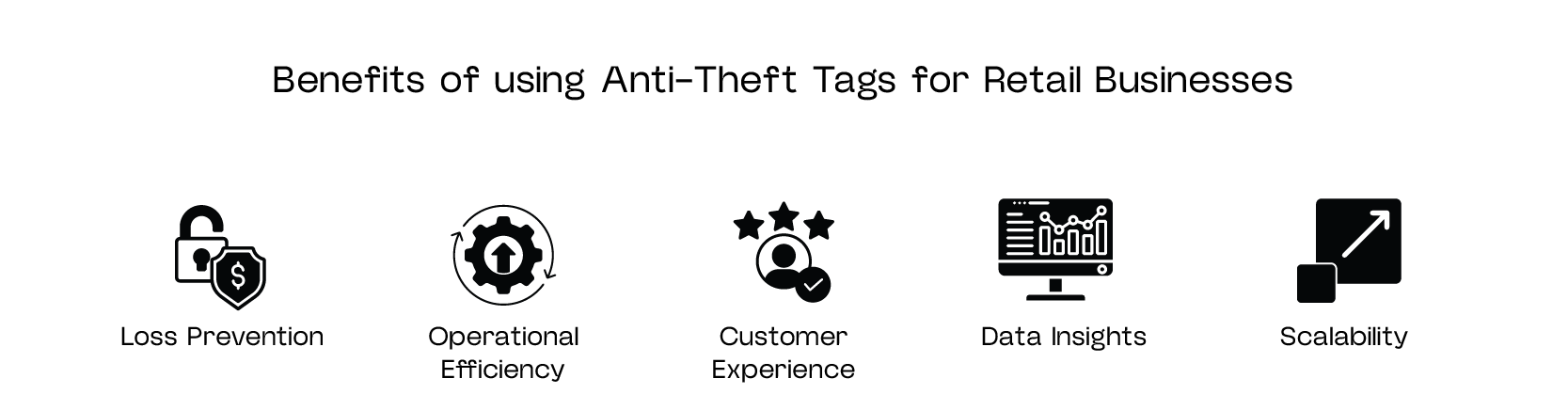
Loss Prevention
RFID anti-theft tags make it difficult for shoplifters or dishonest employees to remove items unnoticed. This proactive system significantly reduces shrinkage, protecting profits and ensuring valuable products remain secure within the store.
Operational Efficiency
Automated RFID tracking eliminates manual inventory counts, saving staff time and reducing human errors. Retailers can quickly identify stock levels, streamline restocking, and improve overall store operations without disrupting daily business activities.
Customer Experience
Shoppers enjoy faster, smoother checkouts since RFID tags are deactivated automatically at the counter. This reduces intrusive bag checks, creating a more pleasant shopping environment and building stronger customer trust and loyalty.
Data Insights:
RFID provides real-time data on product movement, helping retailers understand buying patterns, optimize store layouts, and manage replenishment more effectively. These insights support smarter decisions that directly improve sales and customer satisfaction.
Scalability:
RFID systems are flexible and can be implemented in small boutiques or scaled across large retail chains. This adaptability ensures businesses of all sizes benefit from enhanced security, efficiency, and long-term growth opportunities.
Challenges & Considerations
- Initial Investment: Setting up RFID requires upfront spending on tags, readers, and integration, but it’s a one-time cost that delivers long-term protection and efficiency.
- Staff Training: Employees must be trained to use RFID systems correctly, ensuring smooth operations, proper tag handling, and effective monitoring without disrupting daily store activities.
- Balance: Security measures should protect products without creating inconvenience for customers, maintaining a positive shopping experience while keeping theft under control.
- ROI Perspective: Though initial costs may seem high, long-term savings from reduced theft, faster inventory management, and improved efficiency make RFID a profitable investment.
Future of RFID in Retail
The future of RFID in the retail industry looks promising with smart shelves that track stock in real time, automated checkout systems, AI-driven demand forecasting, and seamless omnichannel integration—helping retailers improve efficiency, reduce shrinkage, and deliver a smoother customer experience.
Conclusion
RFID anti-theft tags are more than just a security measure—they’re a business transformation tool. They reduce losses, improve efficiency, and create a better shopping experience.
For retail owners, the message is clear: RFID anti-theft tags = security + efficiency + customer satisfaction.
Frequently Asked Questions (FAQs)
What are RFID anti-theft tags in retail?
RFID anti-theft tags are radio frequency identification devices attached to products that help retailers prevent theft while also improving inventory visibility.
How do RFID anti-theft tags work?
Each tag contains a unique identifier that is read by RFID antennas at store exits. If the tag is not deactivated during checkout, the system triggers an alert.
Can RFID anti-theft tags improve customer experience?
Yes. RFID enables faster checkout, better product availability, and reduced shrinkage, which directly enhances customer satisfaction.
How do RFID anti-theft tags help retailers reduce shrinkage?
RFID systems monitor product movement across shelves, storerooms, and exits, helping detect unauthorized removal and reducing theft.
Do RFID anti-theft tags slow down checkout processes?
No. RFID tags can be deactivated quickly and automatically during checkout, making the process faster compared to manual barcode scanning.
What types of retail products benefit most from RFID anti-theft tags?
High-value items such as apparel, electronics, cosmetics, and luxury goods benefit most due to improved tracking and security.
Can RFID anti-theft tags be reused?
Yes. Many RFID tags are designed to be reusable, allowing retailers to save costs by reapplying them to new products.
Recent Posts
-

RFID Tag Placement Secrets Every Clothing & Footwear Brand Must Know
Introduction RFID technology has become a game-changer in the apparel and footwear industry. From re …Mar 30th 2026 -
How RFID Solves Shopify Inventory Challenges for D2C Brands
Shopify has quickly become the preferred platform for Direct-to-Consumer (D2C) brands. Its flexibili …Mar 16th 2026 -
RFID vs Barcode in Retail: A Side-by-Side Comparison
Introduction Retail is transforming at a rapid pace, and at the center of this change lies inventory …Mar 6th 2026