
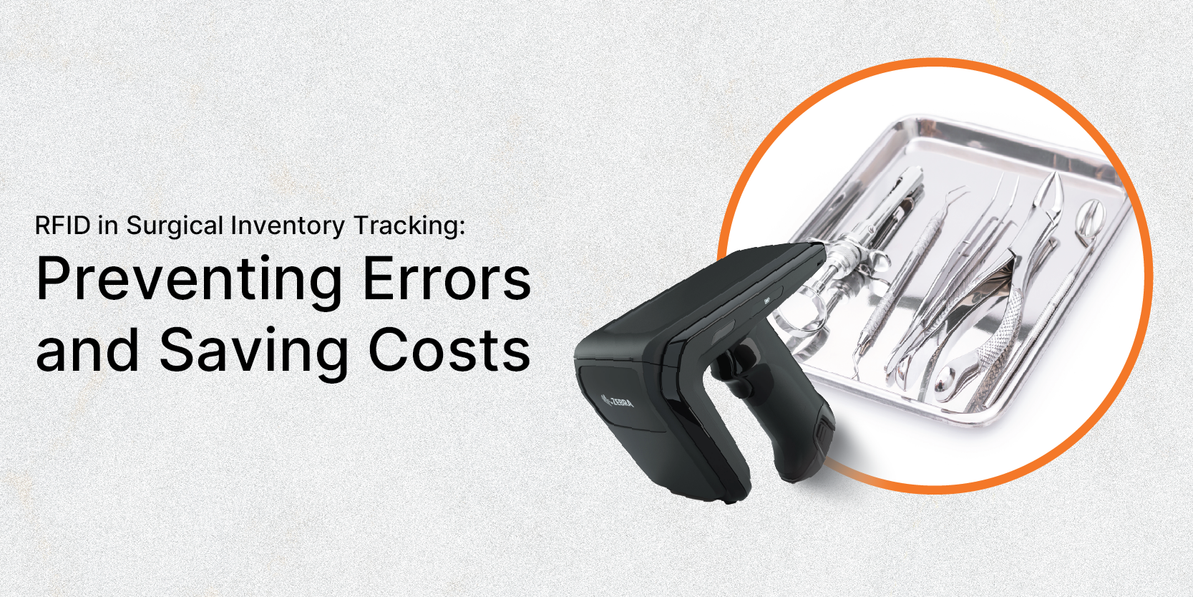
RFID in Surgical Inventory tracking: Preventing Errors and Saving Costs
Introduction
Managing surgical inventory is one of the most critical tasks in hospitals. Errors such as misplaced instruments, expired supplies, or incorrect counts can lead to delays, increased costs, and even risks to patient safety. In operating rooms, accuracy and speed are non-negotiable. Radio Frequency Identification (RFID) technology is emerging as a transformative solution, offering hospitals a smarter way to track, manage, and optimize surgical inventory.
The Current Challenges in Surgical Inventory Tracking
- Manual processes: Many hospitals still rely on barcodes, spreadsheets, or manual checks, which are time-consuming and prone to human error.
- Common errors: Instruments may be misplaced, counts may be inaccurate, and expired items can slip through unnoticed.
- Impact on patient safety: These errors can cause surgical delays, increase infection risks, or lead to complications.
- Financial burden: Wasted supplies, overstocking, and emergency procurement drive up costs significantly.
What is RFID and How It Works in Healthcare
RFID in healthcare uses small tags embedded with microchips that communicate with readers through radio waves. Each tag carries a unique identifier, allowing items to be tracked automatically without manual effort.
- Tags and readers: RFID tags are attached to surgical instruments or consumables, and readers capture their data in real time.
- Difference from barcodes: Unlike barcodes, RFID does not require line-of-sight scanning and can read multiple items simultaneously.
- Real-world example: A surgical kit equipped with RFID tags can be scanned instantly to confirm that all required instruments are present and sterile.
Benefits of RFID in Surgical Inventory Tracking
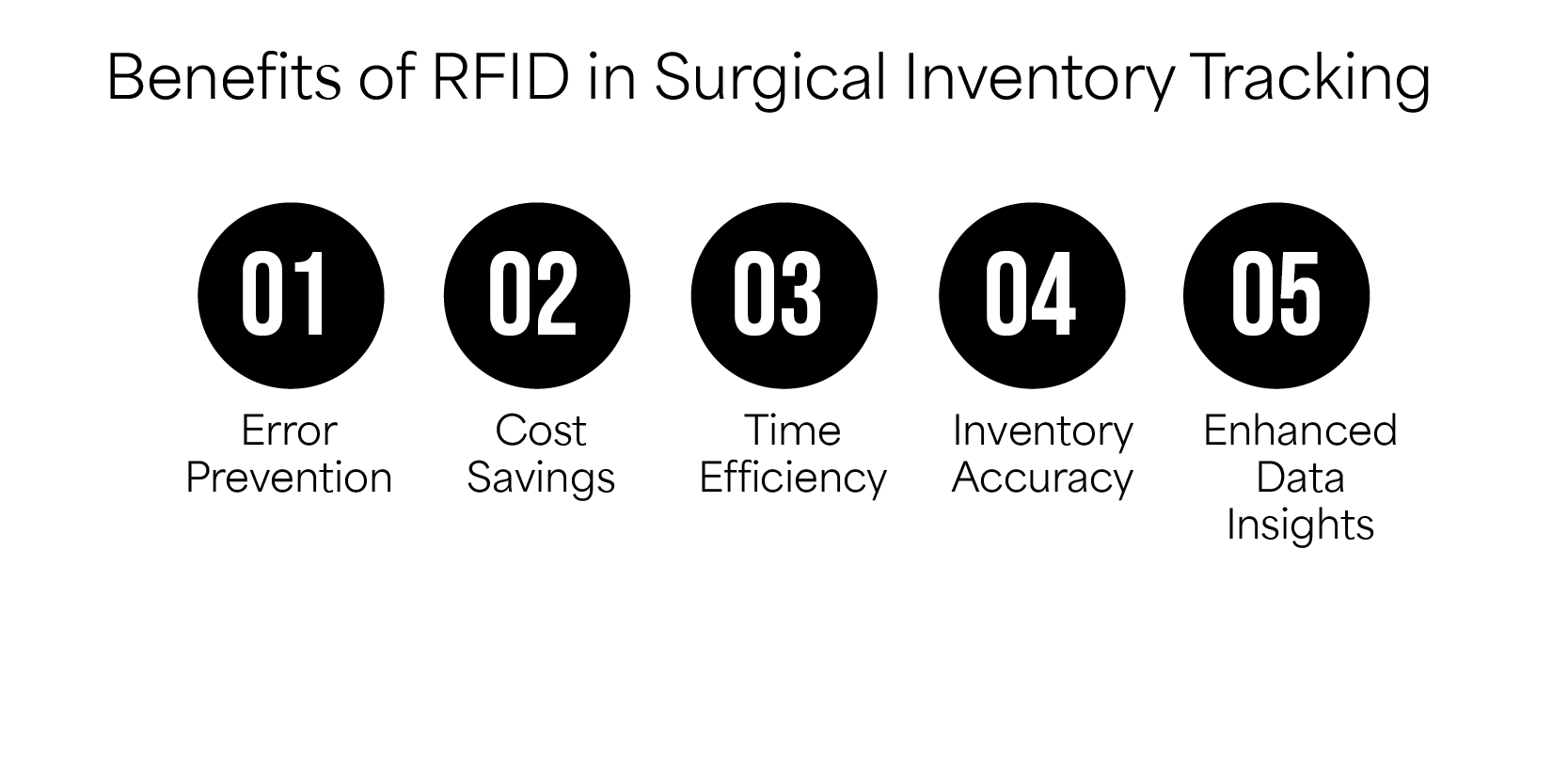
Error Prevention
RFID technology minimizes human mistakes by automatically identifying and logging instruments. With real-time visibility, staff can quickly locate missing or misplaced tools, ensuring surgical kits are complete. Alerts notify teams before procedures begin, reducing delays and preventing errors that could compromise patient safety.
Cost Savings
Hospitals save money by avoiding over-purchasing and reducing waste from unused supplies. Automation lowers labor costs by cutting down on manual counting and tracking. RFID also prevents costly surgical delays by ensuring all required instruments and consumables are ready, helping hospitals operate more efficiently and economically.
Time Efficiency
By automating inventory checks, RFID drastically reduces the time staff spend on manual processes. This efficiency allows surgical teams to focus more on patient care rather than administrative tasks. Faster preparation ensures surgeries start on schedule, improving overall workflow in operating rooms.
Inventory Accuracy
RFID provides precise, real-time data on inventory levels, eliminating guesswork. Hospitals can maintain optimal stock without overstocking or running short. Accurate tracking ensures that every instrument and consumable is accounted for, reducing the risk of shortages and improving confidence in surgical readiness.
Enhanced Data Insights
Beyond tracking, RFID generates valuable data that hospitals can analyze to identify usage patterns and forecast supply needs. These insights help optimize procurement strategies, reduce waste, and improve resource allocation. Over time, data-driven decisions lead to smarter inventory management and long-term cost savings.
Implementation Considerations
Technology Setup
Hospitals adopting RFID need a reliable setup that includes tags for instruments, readers to capture data, and integrated software to manage information. This foundation ensures accurate tracking and smooth workflows, making surgical inventory management more efficient and dependable.
Staff Training
Proper training is essential for successful RFID adoption. When staff understand how to use the system confidently, they can quickly adapt to new processes. Training reduces resistance to change and ensures that technology supports patient care rather than slowing it down.
System Integration
RFID works best when connected with existing hospital systems such as ERP, EHR, and inventory management platforms. Integration allows seamless data flow, ensuring that supply information is consistent across departments and supporting better decision-making for procurement and patient safety.
Scalability
Hospitals can begin with RFID in surgical kits and gradually expand to broader inventory areas. This phased approach reduces complexity, demonstrates clear benefits early, and builds confidence among staff. Over time, scalability ensures maximum value from the investment in RFID technology.
Challenges and Solutions
Implementing RFID in hospitals comes with certain challenges. The initial investment in tags, readers, and software can feel costly, while staff may resist shifting from familiar manual processes. Technical issues, such as ensuring tags withstand sterilization and remain readable, also arise. These hurdles can be overcome through phased rollouts, proper training, vendor support, and demonstrating clear return on investment, making RFID adoption smoother and more sustainable in the long run.
Conclusion
RFID has proven to be a game-changer in surgical inventory tracking, offering hospitals a smarter and more reliable way to manage critical supplies. By reducing errors, cutting unnecessary costs, and ensuring compliance with safety standards, it directly enhances patient care and operational efficiency. Hospitals that embrace RFID today not only improve current workflows but also prepare themselves for a future of smarter, safer, and more cost-effective healthcare delivery.
Recent Posts
-

5 Tag Placement Errors Ruining RFID Accuracy
Introduction Radio Frequency Identification has become a backbone of modern inventory management, re …Sep 8th 2026 -

RFID Asset Tracking for HVAC Companies
HVAC companies rely on a wide range of tools, vehicles, and spare parts to deliver timely service. M …Aug 25th 2026 -

Fix Inventory Inaccuracy with RFID Inventory Tracking Software
Introduction Inventory inaccuracy is one of the biggest challenges businesses face today. Manual err …Aug 12th 2026