
How RFID Prevents Shrinkage in Sporting Goods Retail
Introduction
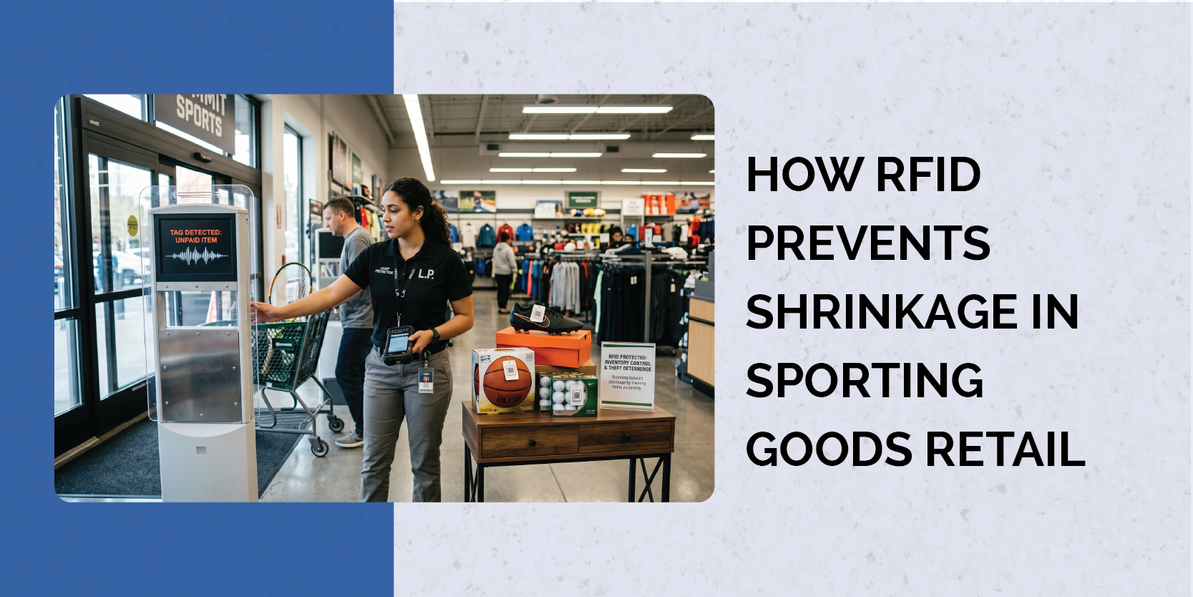
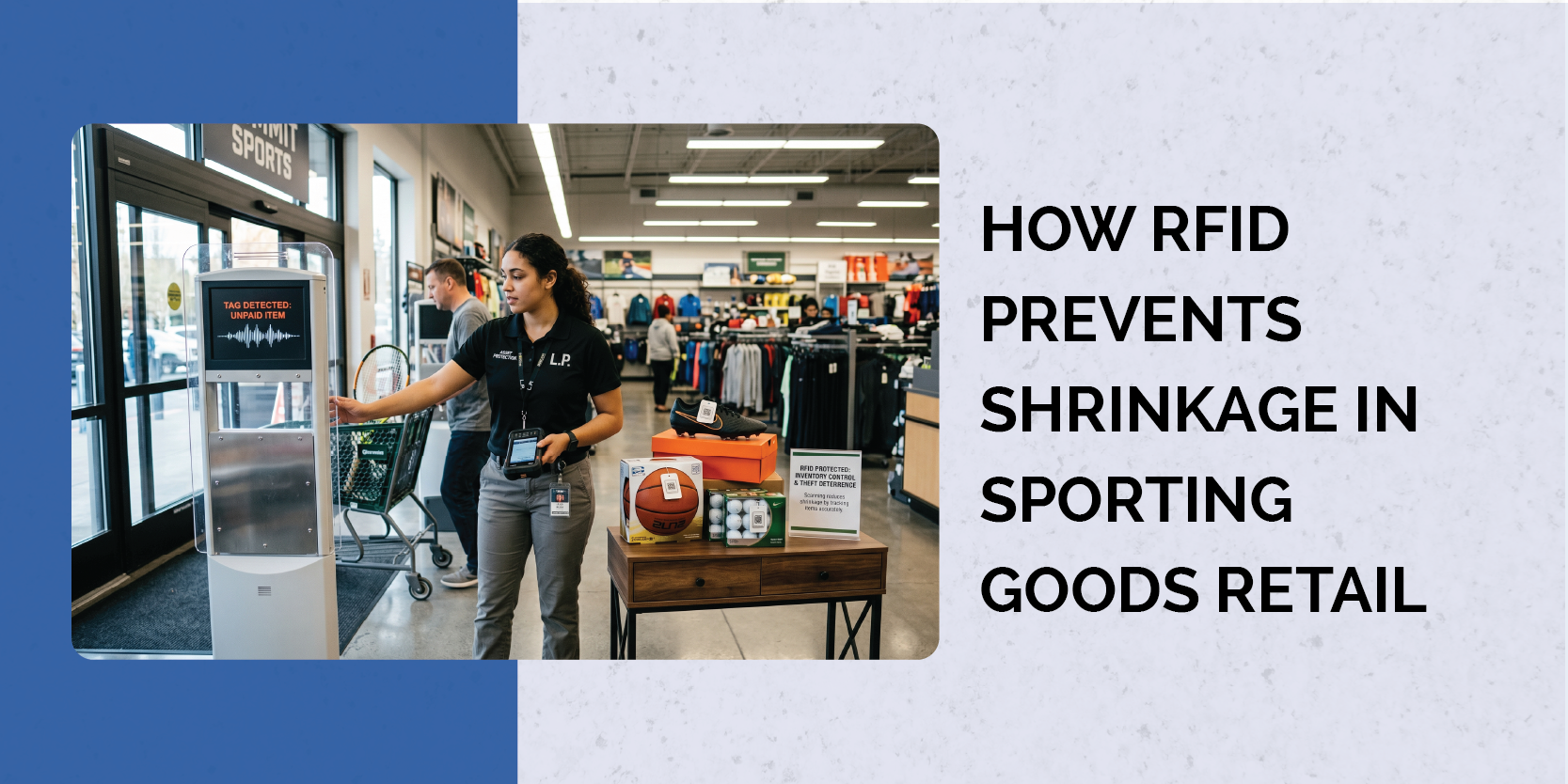
Shrinkage is one of the most persistent challenges in sporting goods retail. Whether caused by theft, misplacement, or administrative errors, it directly eats into profit margins and undermines customer trust. Sporting goods stores, with their wide range of products from small accessories to high-value equipment, are particularly vulnerable. Radio Frequency Identification (RFID) technology is emerging as a powerful solution, offering retailers real-time visibility and control over their inventory. By tackling shrinkage head-on, RFID not only protects profits but also enhances the shopping experience.
Understanding Shrinkage in Sporting Goods Retail
Shrinkage in this sector comes from multiple sources:
- Shoplifting: Small, high-demand items like sports apparel, footwear, or accessories are easy to conceal, making them frequent targets for shoplifters in busy retail environments.
- Employee theft: Internal losses occur when staff exploit weak accountability systems, often removing items unnoticed or manipulating records to cover unauthorized product movement.
- Inaccurate inventory counts: Manual stock checks are prone to human error, leading to discrepancies between recorded and actual inventory, which complicates replenishment and financial reporting.
- Supply chain mistakes: Mislabeling, incorrect shipments, or vendor fraud can distort stock levels, creating confusion and increasing the likelihood of shrinkage across distribution channels.
The sporting goods industry faces unique risks due to:
- High SKU variety: Sporting goods retailers manage thousands of diverse products, from shoes and jerseys to camping gear, making accurate tracking and shrinkage prevention more complex.
- Seasonal demand: Items like ski equipment, football kits, or camping gear experience sharp seasonal spikes, increasing inventory pressure and the risk of misplacement or theft during peak demand.
The financial impact is significant: shrinkage reduces margins, inflates operating costs, and can lead to stockouts that frustrate customers.
RFID Technology Basics
RFID uses small electronic tags attached to products, which communicate with readers via radio waves. Key components include:
- Tags: Tiny embedded chips store product details such as SKU, price, or category, enabling quick identification and seamless tracking throughout the retail supply chain.
- Readers: Specialized devices automatically capture tag data without manual scanning, ensuring faster inventory checks and reducing errors compared to traditional barcode systems.
- Software integration: RFID data connects with inventory management systems, providing real-time updates, improving visibility, and supporting better decision-making across retail operations.
Unlike traditional barcodes, RFID does not require line-of-sight scanning. This enables:
- Real-time visibility: Retailers can instantly track product movement across stores and warehouses, reducing misplacement and ensuring accurate stock availability for customers.
- Automation: RFID streamlines cycle counts and audits, making them faster, more accurate, and less labor-intensive, which improves efficiency and reduces shrinkage risks.
Key Ways RFID Prevents Shrinkage in Sporting Goods
RFID combats shrinkage through multiple mechanisms:
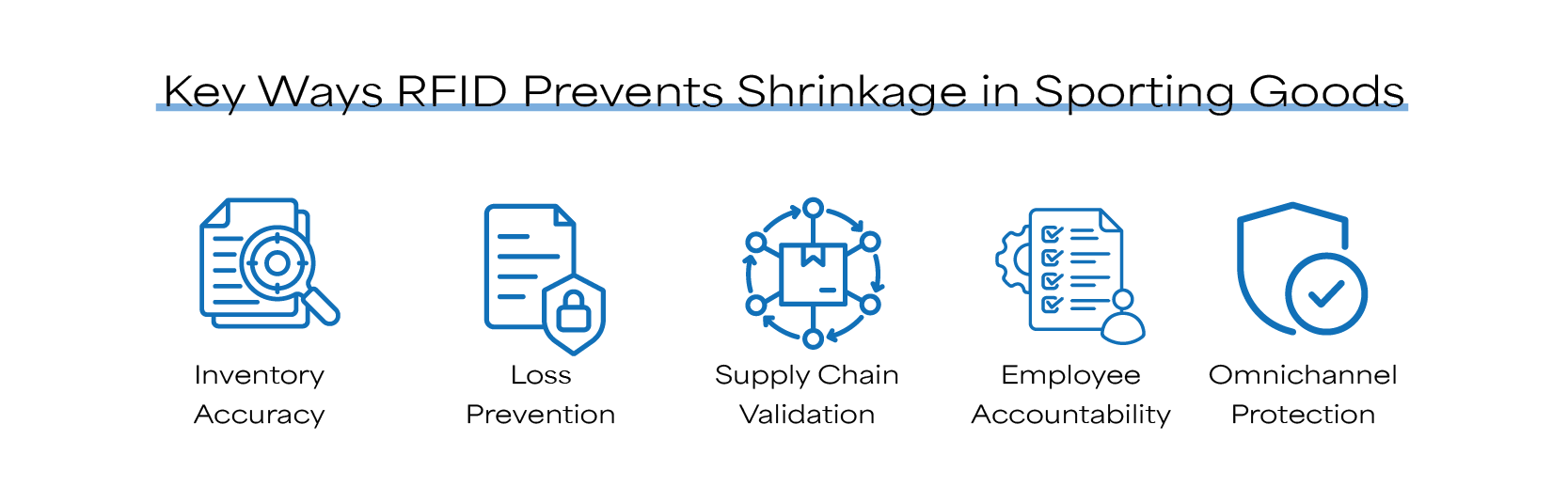
Inventory Accuracy
RFID enables automated cycle counts that significantly reduce discrepancies, ensuring stock records match actual inventory. This improves replenishment, minimizes errors, and helps retailers maintain consistent product availability for customers.
Loss Prevention
RFID-enabled gates and handheld readers detect unauthorized product movement instantly. By alerting staff to potential theft or misplacement, retailers can intervene quickly, reducing losses and strengthening overall store security.
Supply Chain Validation
RFID verifies shipments at every stage, ensuring products received match orders. This reduces vendor fraud, prevents mislabeling, and minimizes costly misplacements, creating a more reliable and transparent supply chain process.
Employee Accountability
RFID tracks item handling across store operations, discouraging internal theft and misuse. By creating visibility into staff interactions with products, it fosters accountability and strengthens trust within the retail workforce.
Omnichannel Protection
RFID ensures accurate inventory across online and offline channels, preventing overselling and misplacement. This protects customer orders, supports seamless fulfillment, and enhances the reliability of omnichannel retail strategies.
Case Applications in Sporting Goods Retail
Footwear and apparel
These are high-theft categories due to their popularity and ease of concealment. RFID-enabled fitting rooms and exit gates help track items, ensuring accurate monitoring and preventing unauthorized removal from the store.
High-value fitness equipment
Expensive items such as treadmills, exercise bikes, or weight sets are prime targets for shrinkage. RFID tags provide continuous tracking, reducing the risk of loss and ensuring accountability throughout storage, display, and sales processes.
Seasonal gear
Products like ski kits, camping gear, and sports kits experience sharp demand peaks. RFID monitoring ensures these items are tracked closely, preventing misplacement and theft during busy seasons when inventory pressure is at its highest.
Shopify Retailers: RFID Integration with TagMatiks RFID Connect
For sporting goods merchants operating on Shopify, integrating RFID is seamless with TagMatiks Retail and TagMatiks RFID Connect. This combination allows retailers to fetch products directly from Shopify, generate and print RAIN RFID labels, and conduct fast, accurate inventory counts. Updated stock data is automatically synced back to Shopify, ensuring real‑time visibility and reducing shrinkage across online and offline channels.
With TagMatiks RFID Connect, Shopify retailers gain plug-and-play integration that streamlines cycle counting, reconciliation, and reporting—all within their existing Shopify workflows. This helps prevent losses from theft, misplacement, or administrative errors while improving customer trust through accurate stock availability.
For retailers that do not use Shopify, TagMatiks Retail functions as a standalone RFID solution, delivering the same benefits of inventory accuracy, shrinkage prevention, and operational efficiency without requiring Shopify integration.
Learn more: TagMatiks Retail | TagMatiks RFID Connect
Broader Benefits of RFID Beyond Shrinkage
RFID delivers far more than shrinkage prevention, offering retailers operational efficiency and customer satisfaction advantages:
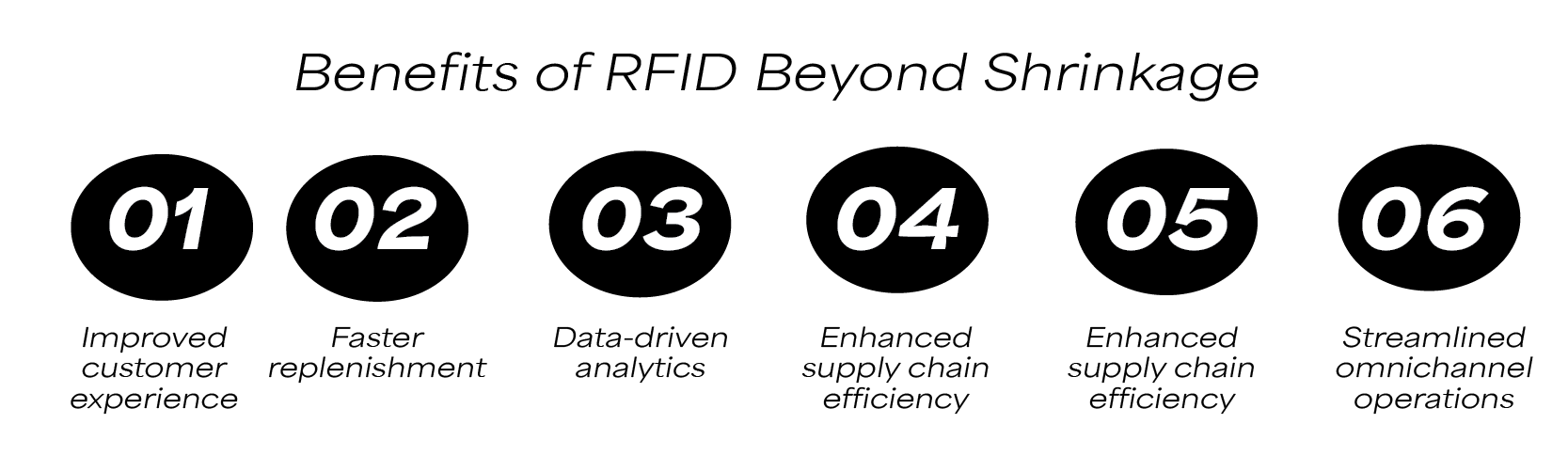
Improved customer experience
Accurate, real-time stock data ensures customers quickly find desired products, reducing frustration and enhancing trust in the retailer’s reliability.
Faster replenishment
Automated alerts notify staff when items run low, enabling timely restocking and minimizing out-of-stock scenarios that can negatively impact sales and customer loyalty.
Data-driven analytics
RFID provides detailed insights into product movement, supporting demand forecasting, merchandising strategies, and promotional planning that align with customer preferences and seasonal trends.
Enhanced supply chain efficiency
RFID improves visibility across distribution channels, ensuring shipments are accurate, reducing delays, and strengthening collaboration with vendors and logistics partners.
Streamlined omnichannel operations
By synchronizing inventory across online and offline platforms, RFID prevents overselling, supports seamless order fulfillment, and enhances the overall omnichannel shopping experience.
Practical Considerations for RFID Implementation
Retailers must carefully evaluate several factors before adopting RFID technology:
- Cost: RFID tags and readers require upfront investment. While costs have decreased over time, retailers must balance initial expenses against long-term savings from reduced shrinkage and improved efficiency.
- Integration: RFID systems must connect seamlessly with existing POS and ERP platforms. Proper integration ensures smooth data flow, accurate reporting, and minimal disruption to established retail operations.
- Staff training: Employees need to adapt to new workflows. Training ensures staff understand how to use RFID tools effectively, maximizing benefits and reducing resistance to technological change.
- ROI timeline: Benefits often materialize within 12–24 months, depending on store size, shrinkage levels, and operational complexity. Retailers should plan for gradual returns rather than immediate gains.
- Scalability: RFID solutions should be flexible enough to expand across multiple stores or product categories, ensuring long-term value as the business grows and inventory complexity increases.
- Vendor collaboration: Successful implementation requires cooperation with suppliers to ensure products arrive tagged correctly, reducing errors and strengthening supply chain visibility from the start.
Conclusion
RFID is more than a reactive tool—it’s a proactive strategy for preventing shrinkage in sporting goods retail. By improving inventory accuracy, deterring theft, and streamlining supply chains, RFID strengthens profitability, customer trust, and operational efficiency. Sporting goods retailers who embrace RFID today position themselves for long-term success in an increasingly competitive market. The time to evaluate RFID adoption is now.
Recent Posts
-
5 Tag Placement Errors Ruining RFID Accuracy
Introduction Radio Frequency Identification has become a backbone of modern inventory management, re …Sep 8th 2026 -

RFID Asset Tracking for HVAC Companies
HVAC companies rely on a wide range of tools, vehicles, and spare parts to deliver timely service. M …Aug 25th 2026 -
Fix Inventory Inaccuracy with RFID Inventory Tracking Software
Introduction Inventory inaccuracy is one of the biggest challenges businesses face today. Manual err …Aug 12th 2026