
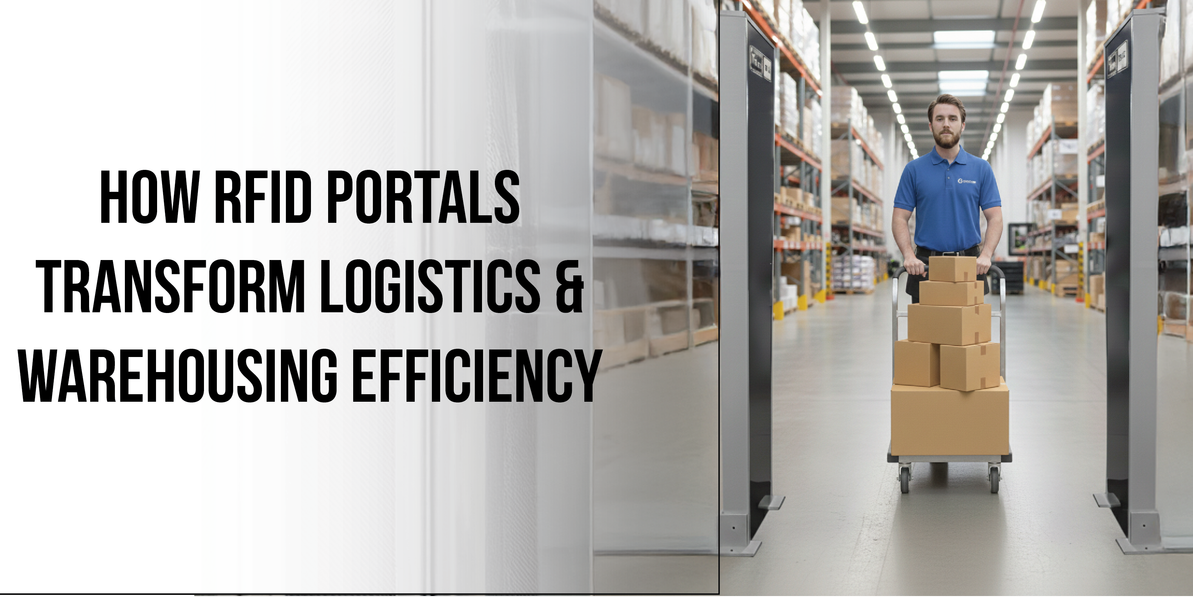
How RFID Portals Transform Logistics & Warehousing Efficiency
Introduction
Running a warehouse or logistics operation is no small task. Every day, teams manage shipments arriving, goods being sent out, and inventory that needs to be tracked. But traditional methods often slow things down. Manual barcode scanning takes time, bottlenecks form at loading docks, and mistakes in inventory records can lead to costly delays.
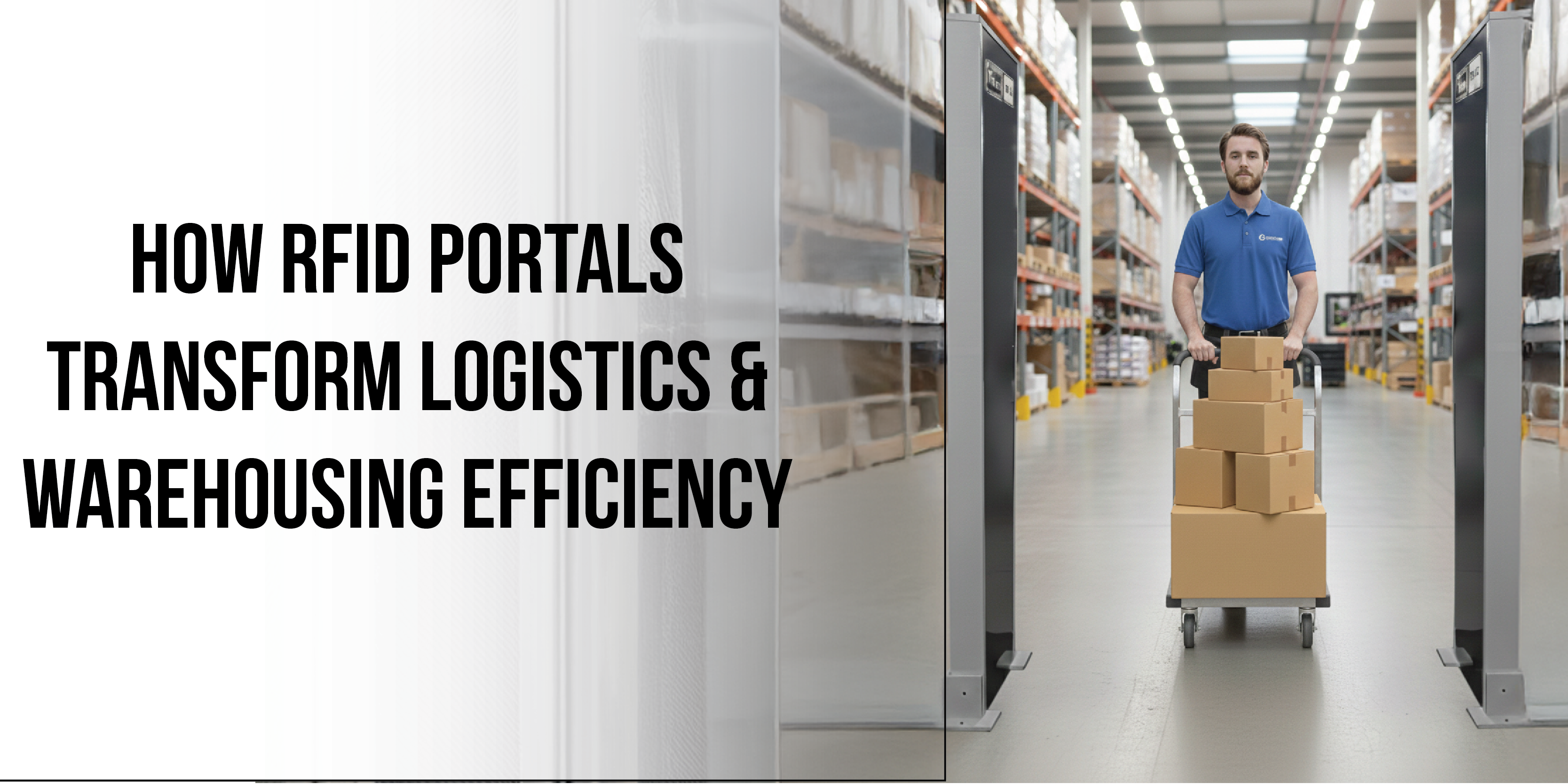
This is where Radio Frequency Identification (RFID) technology steps in. RFID uses tags and readers to identify items automatically, without the need for line-of-sight scanning. And among its many uses, RFID portals are proving to be a real game-changer.
Placed at key points—like dock doors, conveyor belts, or warehouse entryways—RFID portals automatically capture data as tagged items pass through. No manual scanning, no interruptions. Just smooth, hands-free tracking.
Understanding RFID Portals
To put it simply, an RFID portal is like a smart checkpoint inside a warehouse. Whenever items with RFID tags pass through, the portal automatically reads the tags and records the data—no manual scanning required. Unlike handheld readers, which require workers to scan items individually, portals enable hands-free, automated data capture.
Components:
- Antennas: Capture signals from RFID tags.
- Readers: Process tag information and transmit it to systems.
- Middleware: Filters and manages data before integration.
- Integration with WMS: Ensures seamless updates to warehouse management systems.
Types:
- Fixed portals at dock doors: Monitor inbound and outbound shipments.
- Conveyor-mounted portals: Track goods moving along automated lines.
Key Challenges in Logistics & Warehousing (Pre-RFID)
Before RFID portals, warehouses relied heavily on manual processes:
- Barcode scanning was time-consuming and prone to human error.
- Real-time visibility was limited, making it difficult to track inventory accurately.
- Inbound and outbound processing often faced delays due to manual verification.
- Large facilities struggled to track assets efficiently, leading to misplaced goods and inefficiencies.
How RFID Portals Transform Warehouse Operations
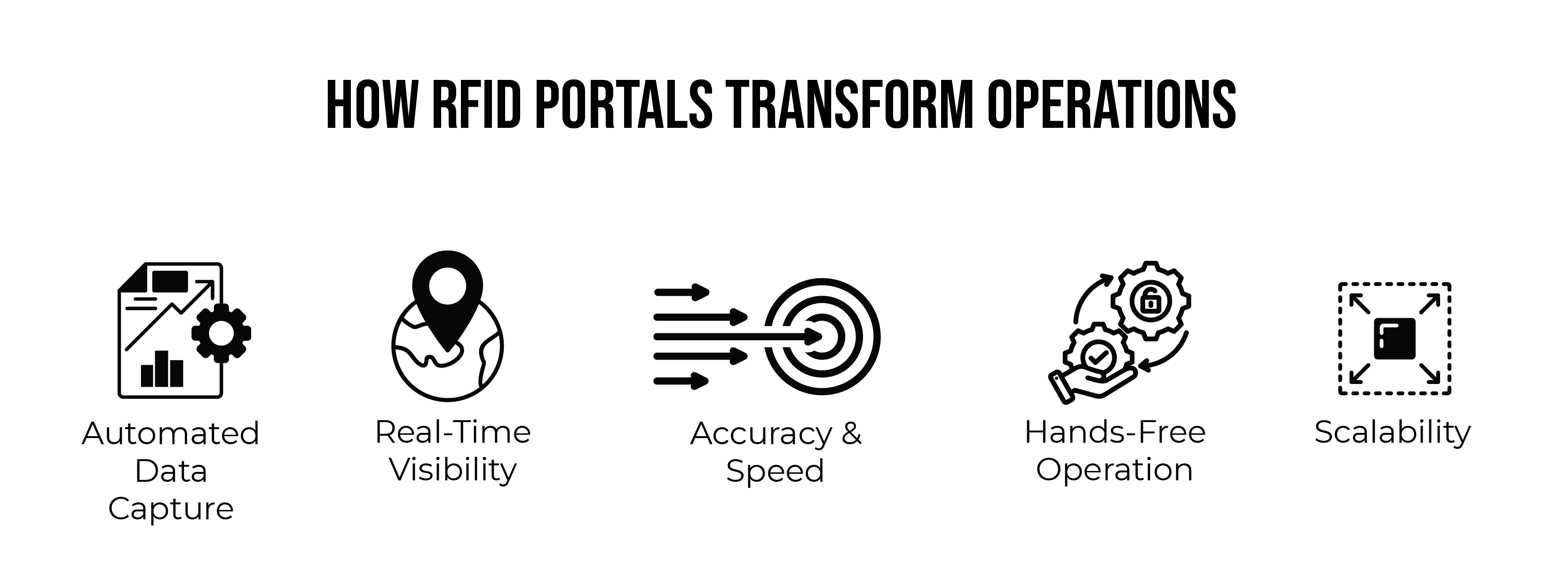
Automated Data Capture
RFID portals automatically scan items as they move through checkpoints, removing the need for manual barcode scanning. This speeds up operations, reduces human effort, and ensures every item is tracked without slowing down workflows.
Real-Time Visibility
Managers gain instant insight into the movement of goods across the warehouse. With RFID portals, inventory updates happen in real time, helping teams make faster decisions, avoid bottlenecks, and maintain accurate stock levels at all times.
Accuracy & Speed
By eliminating manual scanning errors, RFID portals improve accuracy while boosting throughput. Shipments are processed faster, orders are fulfilled more reliably, and the overall pace of warehouse operations increases without compromising quality or precision.
Hands-Free Operation
Workers no longer need to stop and scan items individually. RFID portals handle the process automatically, allowing staff to focus on higher-value tasks. This hands-free approach reduces fatigue and keeps goods moving smoothly through the facility.
Scalability
RFID portals can be installed across multiple zones in a warehouse or logistics hub. As businesses grow, they can easily expand coverage, ensuring consistent tracking and efficiency across larger operations without disrupting existing workflows.
Efficiency Gains with RFID Portals in Warehousing
Inbound Logistics
RFID portals speed up receiving by automatically verifying shipments as they arrive. This reduces manual checks, shortens processing times, and ensures goods are accurately recorded the moment they enter the warehouse.
Outbound Logistics
Order fulfillment becomes smoother with RFID portals. They reduce loading errors by confirming the right items are shipped, helping businesses deliver faster, more reliable service while minimizing costly mistakes.
Inventory Management
Real-time stock updates keep managers informed about inventory levels. RFID portals also simplify cycle counting, making it easier to maintain accuracy and reduce the time spent on manual audits.
Asset Tracking
From pallets to containers, RFID portals continuously monitor valuable assets. This ensures items are always accounted for, reduces losses, and improves visibility across the warehouse and wider supply chain.
ROI & Business Impact
The business case for RFID portals is compelling:
- Cost Savings: By reducing manual labor and minimizing errors, RFID portals cut operational costs. Businesses save money while improving efficiency across logistics and warehouse operations.
- Customer Satisfaction: Faster processing and accurate deliveries lead to happier customers. RFID portals help businesses meet expectations, reduce mistakes, and build stronger trust with clients.
- Scalability: RFID portals can easily expand as operations grow. Whether adding new zones or facilities, the system adapts without disrupting existing workflows or processes.
- Quantifiable Metrics: Companies see measurable improvements: higher throughput, fewer errors, and better inventory accuracy. These metrics prove the real value of RFID portals in daily operations.
Conclusion
RFID portals are transforming logistics and warehousing by delivering automation, accuracy, and real-time visibility. They eliminate inefficiencies, reduce costs, and enhance customer satisfaction—all while preparing businesses for the future of smart supply chains.
For organizations aiming to stay competitive, adopting RFID portals is no longer optional—it’s a strategic necessity.
Recent Posts
-

What Is an RFID Self-Checkout System? A Complete Guide for Retailers
Introduction Retail checkout has seen a remarkable transformation over the years. What started with …Feb 27th 2026 -

Upgrade from Barcodes to RFID on Shopify: A Retailer’s Guide
Retailers on Shopify are beginning to question whether barcodes are enough. With rising customer exp …Feb 24th 2026 -

Work-in-Progress Tracking with RFID in Manufacturing
Introduction In manufacturing, Work-in-Progress (WIP) refers to items that are in various stages of …Feb 20th 2026