
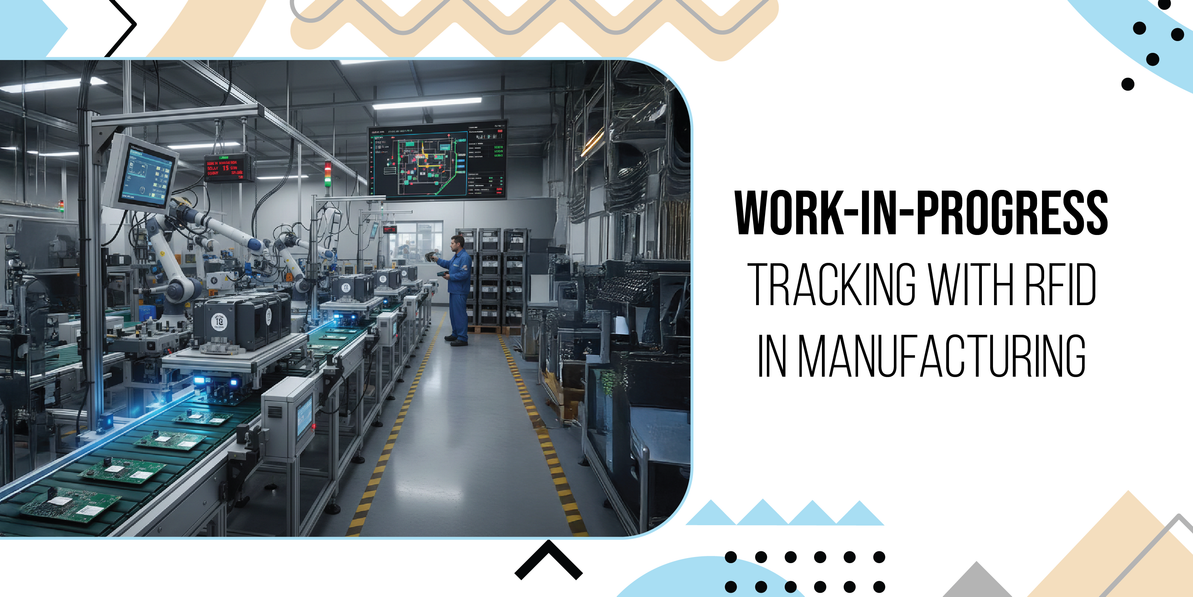
Work-in-Progress Tracking with RFID in Manufacturing
Introduction
In manufacturing, Work-in-Progress (WIP) refers to items that are in various stages of production but not yet finished. Tracking WIP is critical because it ensures that products move smoothly through the production line, deadlines are met, and resources are used efficiently.
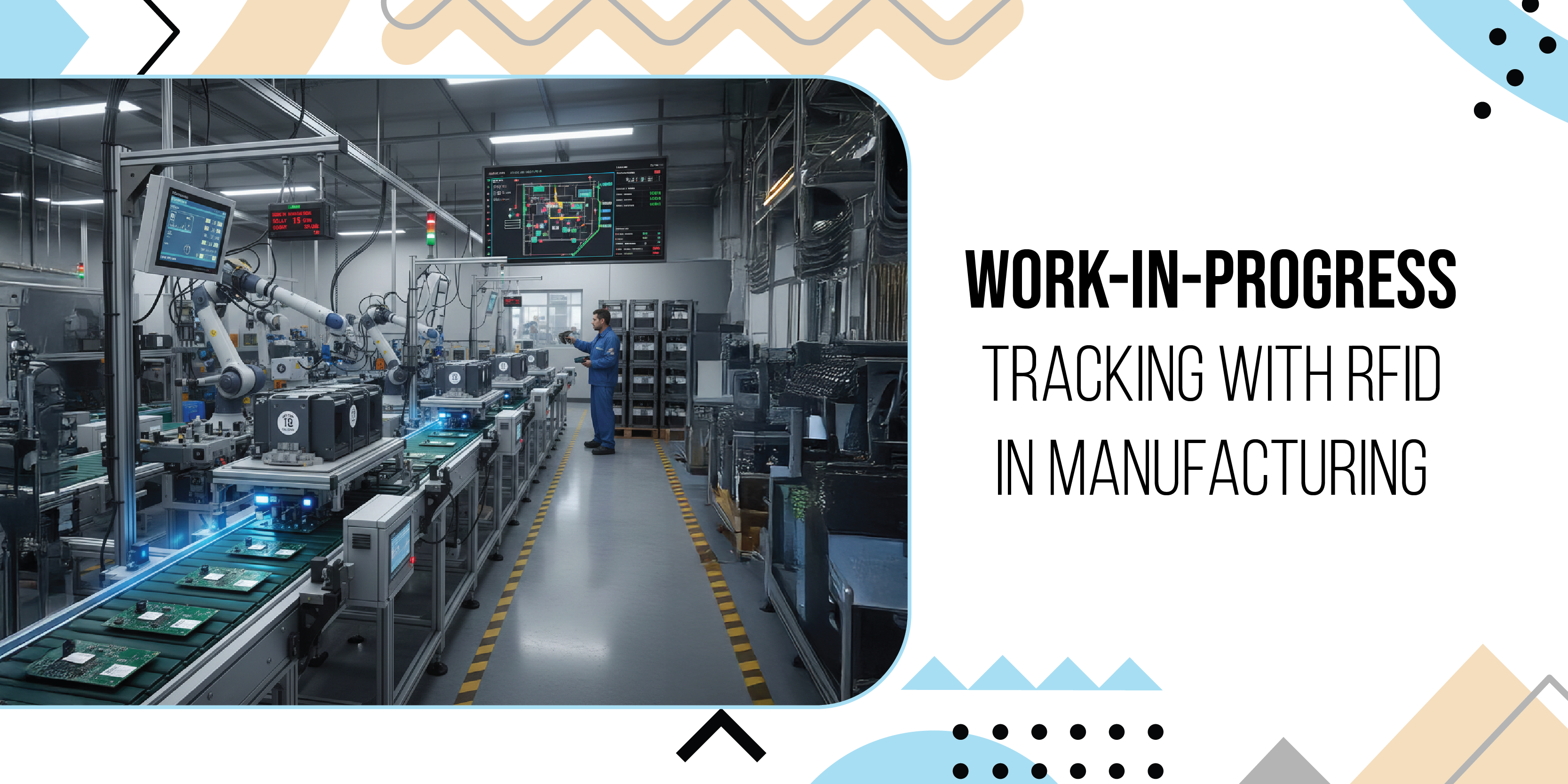
However, many manufacturers still rely on manual methods, such as paper logs or barcode scanning. These approaches often lead to errors, delays, and poor visibility across departments. That’s where RFID comes in—a transformative technology that enables real-time, automated WIP tracking.
What is RFID and How It Work?
RFID technology relies on small electronic tags that are attached to items. These tags communicate with RFID readers using radio waves, and the information they transmit is sent to a central system for processing. The setup typically includes three main components: RFID tags, which store product information; readers, which capture signals from the tags; and software systems, which process and display the collected data.
Unlike traditional barcodes, RFID does not require line-of-sight scanning. This means items can be tracked automatically without manual intervention, and multiple products can be monitored at the same time. Because of this capability, RFID is particularly well-suited for dynamic, fast-moving manufacturing environments where efficiency and accuracy are critical.
The Role of WIP Tracking in Manufacturing
Monitoring WIP is more than just knowing where products are—it’s about controlling the entire production flow.
- Efficiency: ensures smooth movement of goods across stages.
- Quality control: identifies defects early.
- Delivery timelines: keeps production on schedule.
WIP tracking also supports lean manufacturing principles and aligns with Industry 4.0, where automation and data-driven decisions drive competitiveness.
Benefits of RFID in WIP Tracking
RFID brings several advantages to manufacturers:
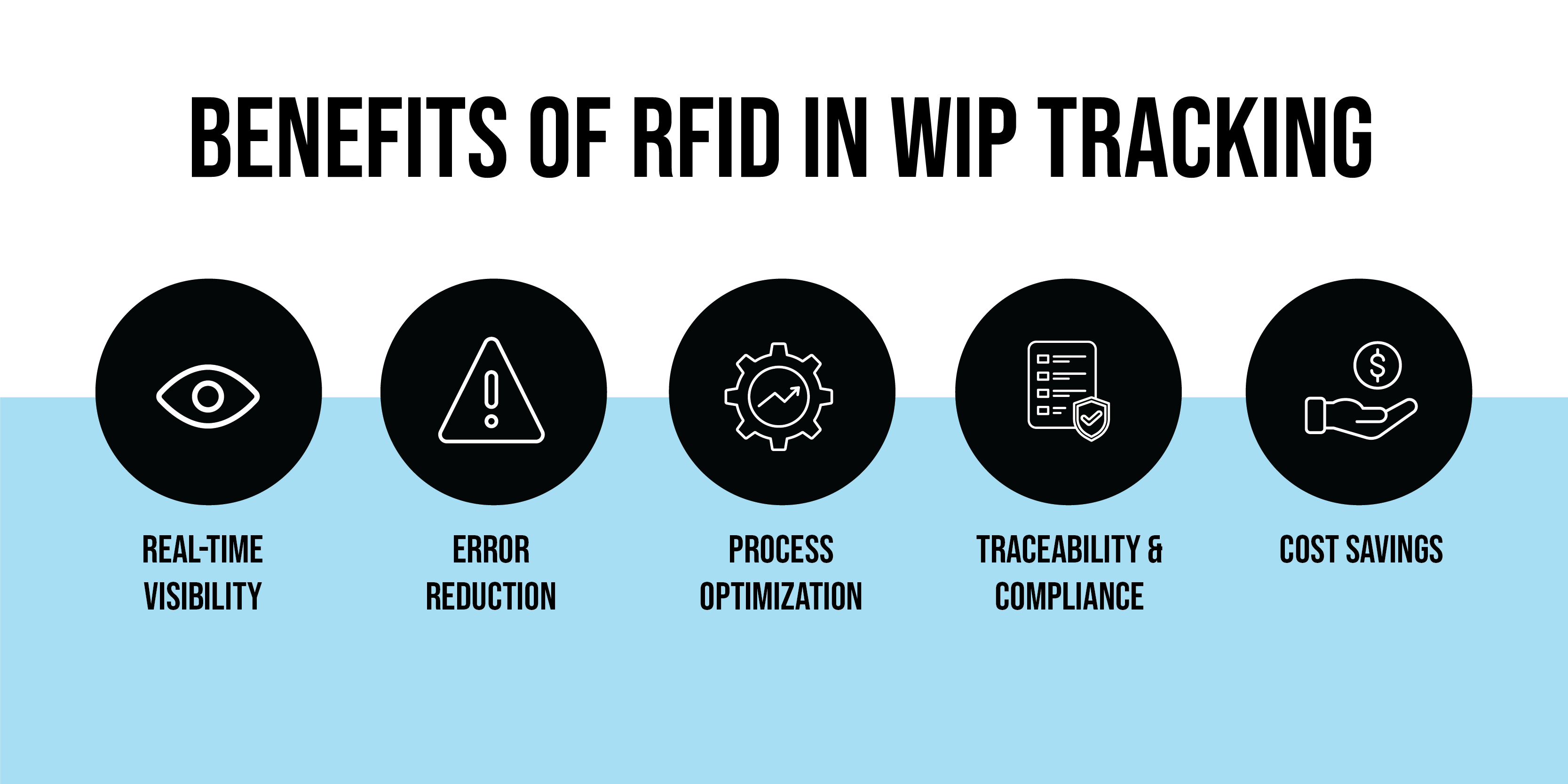
Real-time visibility
RFID provides instant updates on the location and status of items in production. This real-time visibility helps managers monitor progress, quickly identify issues, and make informed decisions to keep manufacturing workflows running smoothly.
Error reduction
By eliminating manual data entry, RFID reduces the chances of mistakes that often occur with traditional tracking methods. Automated scanning ensures accurate records, saving time and preventing costly errors that could disrupt production schedules.
Process optimization
RFID highlights bottlenecks and inefficiencies within the production line. With clear insights into where delays occur, manufacturers can streamline workflows, balance workloads, and improve overall productivity across departments.
Traceability & compliance
RFID ensures complete traceability of items throughout the production cycle. This creates audit-ready records that support compliance with industry regulations, making it easier to track product history and meet quality standards.
Cost savings
By reducing rework, downtime, and inventory holding costs, RFID helps manufacturers save money. The improved efficiency and accuracy translate into long-term financial benefits, making RFID a valuable investment for modern manufacturing operations.
Practical Applications of RFID in Manufacturing
RFID can be applied across multiple areas of production:
- Assembly line tracking: RFID allows manufacturers to monitor each stage of product assembly in real time. This ensures smooth progress, reduces delays, and helps supervisors quickly identify where issues may arise.
- Semi-finished goods movement: With RFID, semi-finished goods can be tracked as they move between departments. This prevents misplacement, improves coordination, and ensures that production flows seamlessly across different areas of the factory.
- Quality inspection checkpoints: RFID supports quality control by recording inspection results at checkpoints. Only approved items move forward, reducing defects and ensuring that products meet required standards before reaching the next stage.
- Automated reporting: Supervisors and managers benefit from automated RFID reporting, which provides instant dashboards and accurate data. This saves time, improves decision-making, and eliminates the need for manual record-keeping.
Case Example
Imagine a factory before RFID adoption, where workers rely on manual barcode scanning. Items are often misplaced, delays occur, and supervisors struggle to access accurate reports. This creates inefficiencies and frustration across the production line.
After RFID implementation, the situation changes dramatically. Cycle times become shorter, errors in WIP reporting decrease, and managers gain access to real-time dashboards that support better decision-making. The transformation is clear—RFID replaces confusion with clarity, helping manufacturers achieve smoother operations and greater efficiency.
Implementation Considerations
Before adopting RFID, manufacturers need to plan carefully to ensure a smooth transition. The first step is setting up the right infrastructure, which includes RFID tags, readers, and integration software. It’s equally important to connect these systems with existing ERP or MES platforms so that data flows seamlessly across operations. Companies should also evaluate the cost of implementation against the long-term efficiency gains to understand the return on investment.
Finally, change management plays a crucial role—staff must be trained, and workflows adapted to fully leverage the benefits of RFID technology.
Future of RFID in Manufacturing
RFID in manufacturing is evolving quickly and is set to play a central role in the development of smart factories. By integrating with IoT ecosystems, RFID can connect seamlessly with sensors and other connected devices, creating a more intelligent and responsive production environment. Another key advantage is scalability, as RFID technology can be adopted across diverse industries such as automotive, electronics, and textiles.
Conclusion
RFID-enabled WIP tracking is more than a technology upgrade—it’s a strategic advantage. By providing real-time visibility, reducing errors, and streamlining workflows, RFID in manufacturing helps companies achieve greater accuracy and productivity. It also supports compliance, improves decision-making, and reduces costs, making it a strategic investment for businesses aiming to stay competitive.
Manufacturers looking to strengthen their operations should explore RFID solutions as a step toward building smarter, future-ready production systems.
Recent Posts
-

RFID vs Barcode in Retail: A Side-by-Side Comparison
Introduction Retail is transforming at a rapid pace, and at the center of this change lies inventory …Mar 6th 2026 -

What Is an RFID Self-Checkout System? A Complete Guide for Retailers
Introduction Retail checkout has seen a remarkable transformation over the years. What started with …Feb 27th 2026 -

Upgrade from Barcodes to RFID on Shopify: A Retailer’s Guide
Retailers on Shopify are beginning to question whether barcodes are enough. With rising customer exp …Feb 24th 2026