

RF Shielding Explained: Types, Applications, and Benefits
Introduction
RF shielding is essential for protecting devices from electromagnetic interference. This guide explains shielding types, key applications, and benefits—helping you identify the right solutions without extra fluff, ensuring clarity for choosing the exact products you need.

This is where RF shielding comes in. RF shielding refers to the practice of blocking or reducing unwanted radio frequency signals to protect sensitive electronics. From smartphones to medical equipment, shielding ensures devices work reliably in our increasingly wireless world.
In this blog, we’ll break down what RF shielding is, why it matters, the different types available, where it’s used, and the benefits you simply can’t ignore.
What is RF Shielding?
At its core, RF shielding is about controlling electromagnetic waves. It prevents external signals from interfering with a device and stops internal signals from leaking out.
- How it works: Shielding materials either reflect RF waves away, absorb them, or safely ground them.
- Everyday analogy: Think of RF shielding like noise-canceling headphones. Just as those headphones block unwanted sound waves, shielding blocks unwanted radio waves to keep your device “listening” only to the signals it needs.
Why RF Shielding Matters Today
RF shielding helps keep RFID scanning accurate. In busy environments with many tagged items, shielding makes sure only the products you want to scan are picked up. Without it, stray tags (irrelevant RFID signals from nearby items) can cause wrong reads, mistakes in inventory, and wasted time.
By controlling the scanning environment, RF shielding:
- Eliminates stray tag interference so operations stay precise and reliable.
- Improves inventory accuracy by focusing only on desired products.
- Boosts efficiency by reducing re-scans and manual corrections.
Types of RF Shielding
Metallic Shielding
Metallic shielding uses materials like copper, aluminum, or steel to block RF signals. These metals offer excellent conductivity and durability, making them highly effective in preventing interference. However, they can be heavy and costly. Metallic enclosures are commonly used in server racks, military-grade equipment, and critical communication systems where reliability is non-negotiable.
Conductive Coatings & Paints
Conductive coatings and paints are applied directly to plastic or non-metallic surfaces, creating a lightweight and flexible shielding solution. They are cost-effective and ideal for consumer electronics such as smartphones, laptops, and tablets. This method allows manufacturers to integrate shielding without adding bulk, ensuring sleek designs while maintaining protection against electromagnetic interference.
RF Shielding Fabrics & Textiles
RF shielding fabrics are made from conductive fibers, often coated with silver or other metals. These textiles are flexible, wearable, and adaptable, making them suitable for specialized applications. They are widely used in medical wearables, protective hospital curtains, and military uniforms, where shielding must combine comfort, mobility, and effective protection against harmful RF exposure.
Composite & Hybrid Materials
Composite shielding combines polymers with conductive fillers, creating lightweight and customizable solutions. These materials are perfect for complex designs in industries like automotive and aerospace, where weight reduction is critical. Hybrid shielding offers versatility, balancing strength and flexibility, and is increasingly used in electric vehicles, aircraft components, and advanced electronics requiring tailored EMI protection.
Gaskets & Seals
Gaskets and seals ensure continuity in shielding by closing gaps in enclosures where RF signals might leak. They are typically made from conductive elastomers or foams, providing both flexibility and durability. Commonly used in industrial machinery and communication equipment, they prevent interference at joints and seams, maintaining consistent shielding performance across the entire enclosure.
5. Applications of RF Shielding
RF shielding is everywhere, even if you don’t notice it:
Consumer Electronics
Smartphones, laptops, and smartwatches rely on RF shielding to prevent interference from surrounding signals. Shielding ensures smooth performance, stable connectivity, and reliable data transfer, allowing users to enjoy uninterrupted communication and functionality in everyday devices.
Healthcare
In healthcare, shielding is vital for MRI rooms, medical implants, and hospital equipment. It prevents external interference that could compromise patient safety or diagnostic accuracy, ensuring medical devices operate reliably in sensitive environments filled with electronic signals.
Automotive
Modern vehicles, especially electric and autonomous ones, use shielding to protect batteries, infotainment systems, and sensors. Shielding ensures reliable communication between components, reduces risks of malfunction, and supports safe driving experiences in increasingly complex automotive environments.
Aerospace & Defense
Aircraft avionics and military communication systems depend on shielding for mission-critical reliability. It prevents interference that could disrupt navigation or secure communications, ensuring safety and performance in high-stakes aerospace and defense operations where precision is essential.
Industrial & Retail
RF shielding supports RFID systems, warehouse automation, and robotics by ensuring accurate tracking and smooth operations. It prevents interference that could cause errors in inventory management or robotic workflows, keeping industrial and retail environments efficient and reliable.
Telecommunications
Telecommunications infrastructure, including 5G towers, data centers, and networking hardware, relies on shielding to maintain stable connectivity. Shielding reduces interference, ensuring faster data transfer, reliable communication, and consistent performance in today’s high-demand digital networks.
Benefits You Shouldn’t Ignore
Performance Reliability
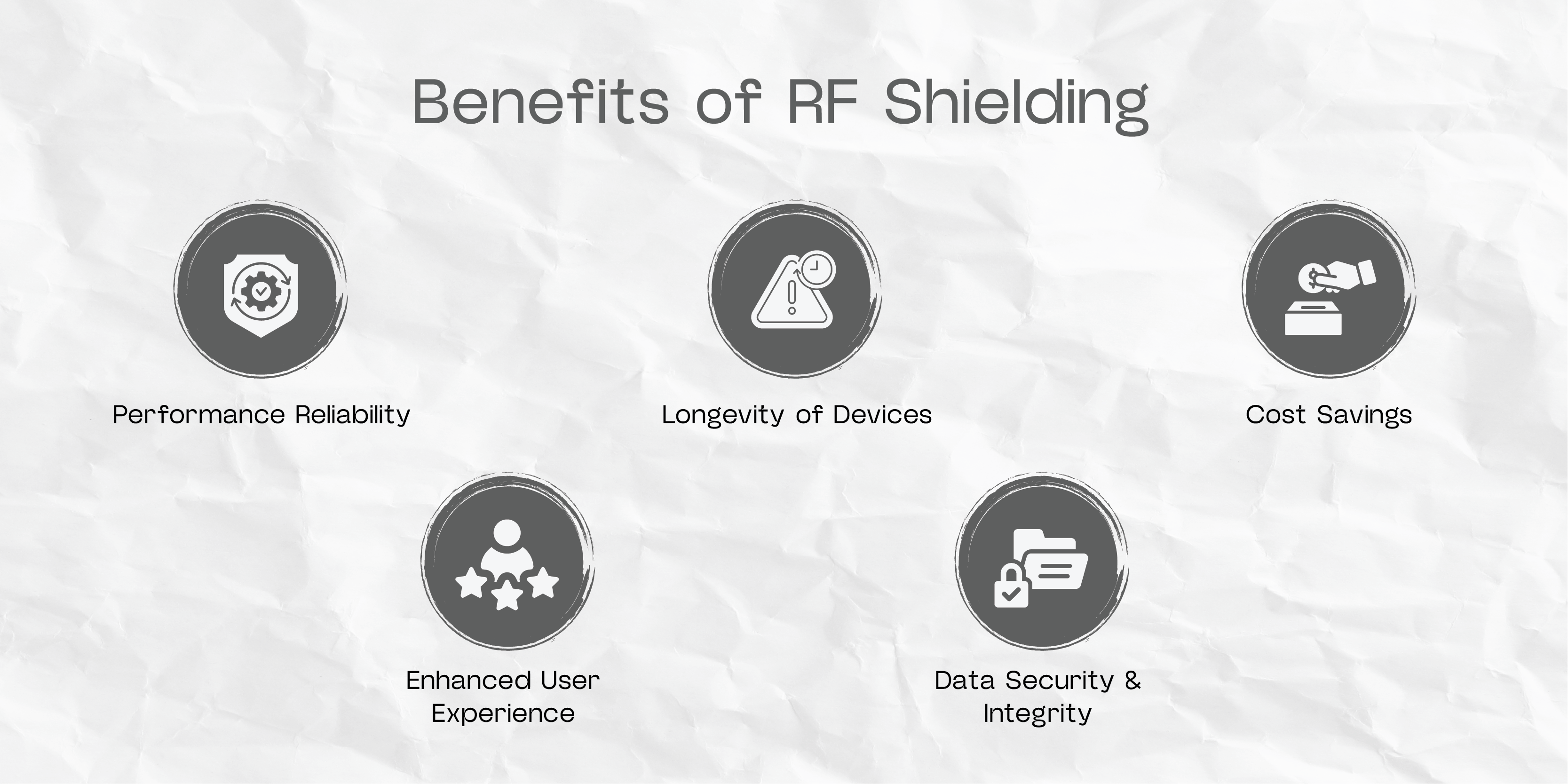
RF shielding ensures devices deliver stable signals and reduced interference, even in crowded environments filled with wireless communication. This reliability is crucial for sensitive applications like medical equipment, automotive sensors, and aerospace systems where consistent performance is non-negotiable.
Longevity of Devices
By protecting electronics from continuous electromagnetic stress, RF shielding prevents premature wear and malfunction. This extends the operational life of devices, reducing the need for frequent replacements and ensuring long-term durability in consumer, industrial, and critical systems.
Cost Savings
Shielding minimizes EMI-related failures, reducing downtime, warranty claims, and costly product recalls. Businesses benefit from lower maintenance expenses and improved efficiency, making RF shielding a cost-effective solution that protects both technology investments and operational budgets.
Enhanced User Experience
Users expect their devices to “just work.” RF shielding delivers seamless connectivity and consistent performance, building trust in technology. Whether streaming, navigating, or communicating, shielding ensures smooth experiences without frustrating disruptions or signal drops.
Data Security & Integrity
RF shielding safeguards sensitive systems from data leaks or manipulation caused by electromagnetic interference. This protection is vital in industries like finance, defense, and IoT, where secure communication and reliable data integrity are essential for safety and trust.
Conclusion
RF shielding truly stands as the unsung hero of modern technology, silently protecting devices, networks, and industries from disruptive interference. In sectors like healthcare, automotive, retail, and telecommunications, shielding ensures safety, reliability, and efficiency. By investing in effective RF shielding today, organizations can reduce risks, extend device lifespans, and prepare for future challenges, making it a critical foundation for seamless connectivity and technological growth.
Frequently Asked Questions (FAQs)
What is RF shielding?
RF shielding is the practice of blocking or reducing unwanted radio frequency signals to protect sensitive electronics from electromagnetic interference (EMI).
How does RF shielding work?
Shielding materials either reflect, absorb, or safely ground RF waves, preventing external signals from interfering with devices and stopping internal signals from leaking out.
Where is metallic RF shielding commonly used?
Metallic enclosures are used in server racks, military-grade equipment, and communication systems, where durability and reliability are essential.
What are RF shielding fabrics used for?
These textiles, often coated with silver or other metals, are used in medical wearables, hospital curtains, and military uniforms, combining comfort with effective protection.
How is RF shielding applied in healthcare?
It is vital for MRI rooms, medical implants, and hospital equipment, preventing interference that could compromise patient safety or diagnostic accuracy.
What role does RF shielding play in automotive and aerospace industries?
- In automotive, shielding protects batteries, infotainment systems, and sensors.
In aerospace and defense, it ensures reliable avionics and secure communications.
Recent Posts
-

RFID vs Barcode in Retail: A Side-by-Side Comparison
Introduction Retail is transforming at a rapid pace, and at the center of this change lies inventory …Mar 6th 2026 -
What Is an RFID Self-Checkout System? A Complete Guide for Retailers
Introduction Retail checkout has seen a remarkable transformation over the years. What started with …Feb 27th 2026 -

Upgrade from Barcodes to RFID on Shopify: A Retailer’s Guide
Retailers on Shopify are beginning to question whether barcodes are enough. With rising customer exp …Feb 24th 2026